
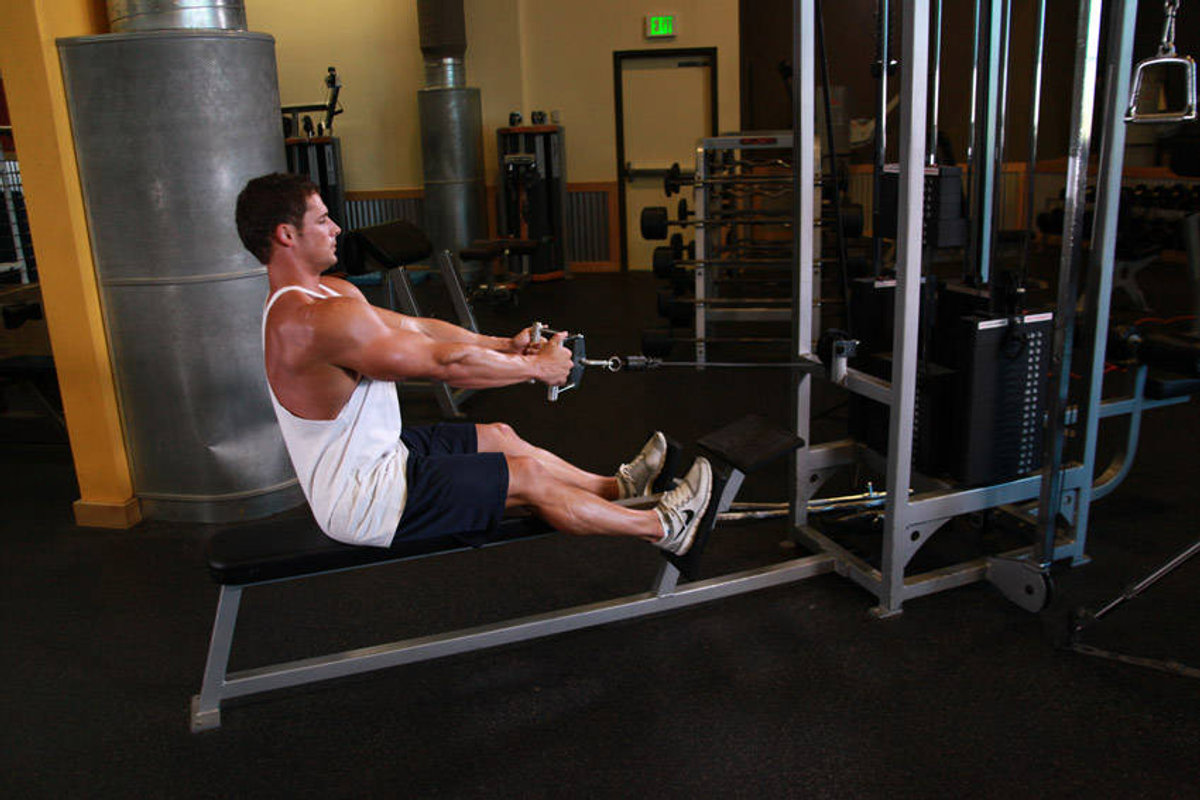
Seated Cable Row
Safety Rating for 40+
Benefits for 40+
Seated cable rowing is one of the safest and most effective exercises against age-related postural deterioration. It specifically strengthens the rhomboids, middle trapezius, and posterior shoulder muscles – exactly the muscles that counteract the increasing rounded back after 40. The seated position completely unloads the lumbar spine and the constant cable resistance enables pain-free training even with existing back issues.
Form Cues
- Upright torso, slight chest forward lean – don't round the back
- Pull handle to lower sternum, squeeze shoulder blades together
- Return under control without letting the back tip forward
Common Mistakes
- Swinging torso forward and back – loads the lumbar spine and removes stimulus from the back
- Shrugging shoulders up instead of squeezing shoulder blades – shifts load to upper trapezius
- Rounding back during the forward motion – especially dangerous for 40+ with degenerative discs
- Flaring elbows too far out – shifts muscle activation away from middle back
Modifications
Beginner
Start with light weight and V-bar handle. Practice only scapular retraction before initiating the full pull. 12–15 reps at RPE 6–7 for technique building.
For Joint Issues
For back issues: adjust seat pad so the lumbar spine is neutrally supported. Work close to the body without momentum. Train unilaterally to correct imbalances and dose load individually.
Advanced
Rotate different grip attachments (close, wide, rope) for varied muscle stimulus. Pause reps: 2 second hold at the contracted point. Unilateral execution for maximum lat stretch and contraction path.
Scientific Basis
The research explicitly lists seated cable row as a shoulder-safe Tier 1 exercise that builds postural muscles critical for aging adults. Constant cable resistance with high SFR and minimal injury risk.
Contraindications
- Acute herniated disc with radicular symptoms (radiating into legs)
- Recent surgeries in the lumbar spine or shoulder girdle area
- Severe active inflammation in shoulder or elbow joints
Related Exercises
Related Guide