
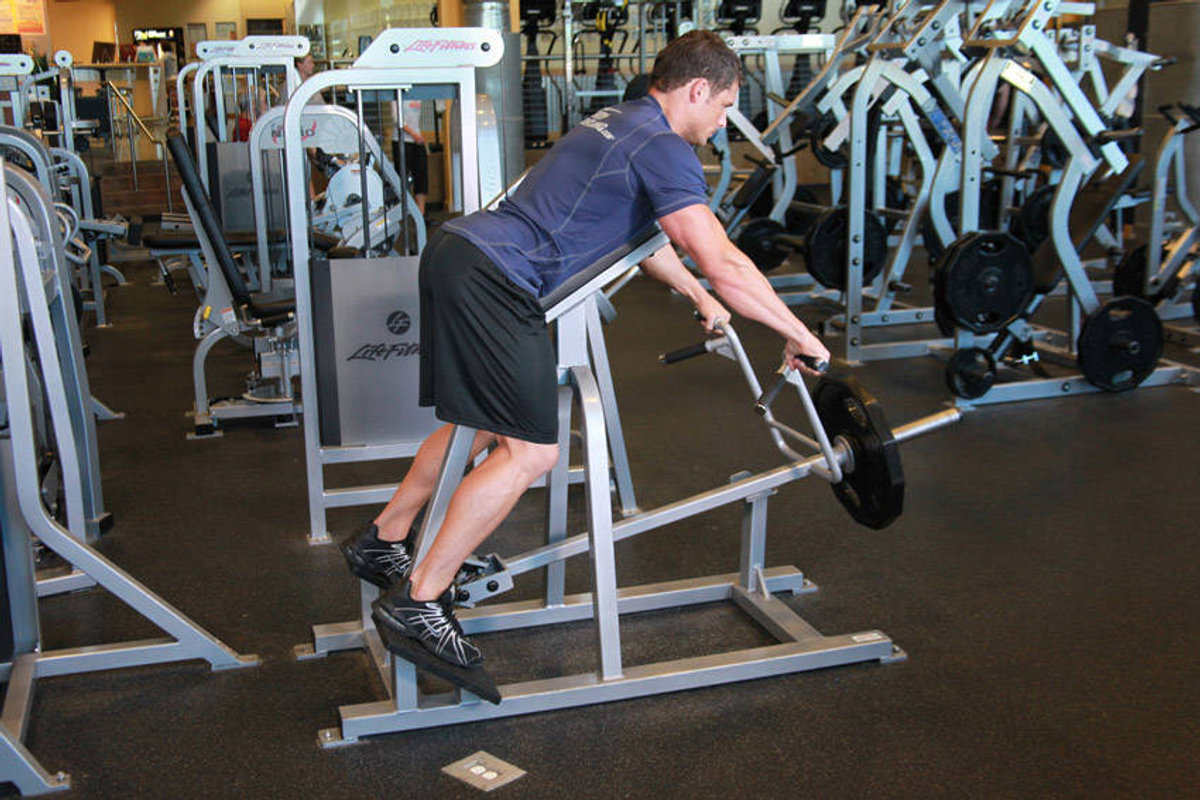
Chest-Supported T-Bar Row
Safety Rating for 40+
Benefits for 40+
The chest-supported T-bar row combines the benefits of lumbar unloading through the pad with the ability to move heavier weights than machine rows. For 40+ trainees suffering from back pain, this position is a game-changer – they can practice real progressive overload without endangering the spine. The eccentric phase promotes tendon adaptation, particularly important given the slowed collagen synthesis after 40.
Form Cues
- Lay chest firmly on pad – keep hips stable
- Grip handles with close or neutral grip
- Drive elbows back, squeeze shoulder blades together
Common Mistakes
- Lifting chest off pad to row heavier – eliminates lumbar protection and defeats the purpose
- Hips rising off pad at heavy weight – transfers load to the lower back
- Shrugging shoulders instead of retracting shoulder blades down and back
- Reps too fast without pause at the contracted point – reduces time under tension
Modifications
Beginner
Start with light plates, full ROM. Consciously hold 2 seconds at the contracted point. 10–12 reps at RPE 6–7.
For Joint Issues
For back issues: this exercise is already the most back-friendly barbell rowing alternative. Adjust pad position so the lumbar spine rests relaxed. For wrist pain: use neutral-grip handles.
Advanced
Heavy T-bar rowing in the 6–8 rep range. Unilateral execution with increased ROM. Cluster sets (3–4 reps, 15 seconds rest, repeat) for high volume at heavy weight.
Scientific Basis
Chest-supported rowing eliminates the need for trunk stabilization and thus lumbar spine loading. Allows greater focus on target muscles. Excellent alternative to free bent-over rowing for 40+.
Contraindications
- Acute rib injuries or sternum fractures
- Recent abdominal surgeries stressed by the chest pad
- Severe respiratory conditions where prone position restricts breathing
Related Exercises
Related Guides