
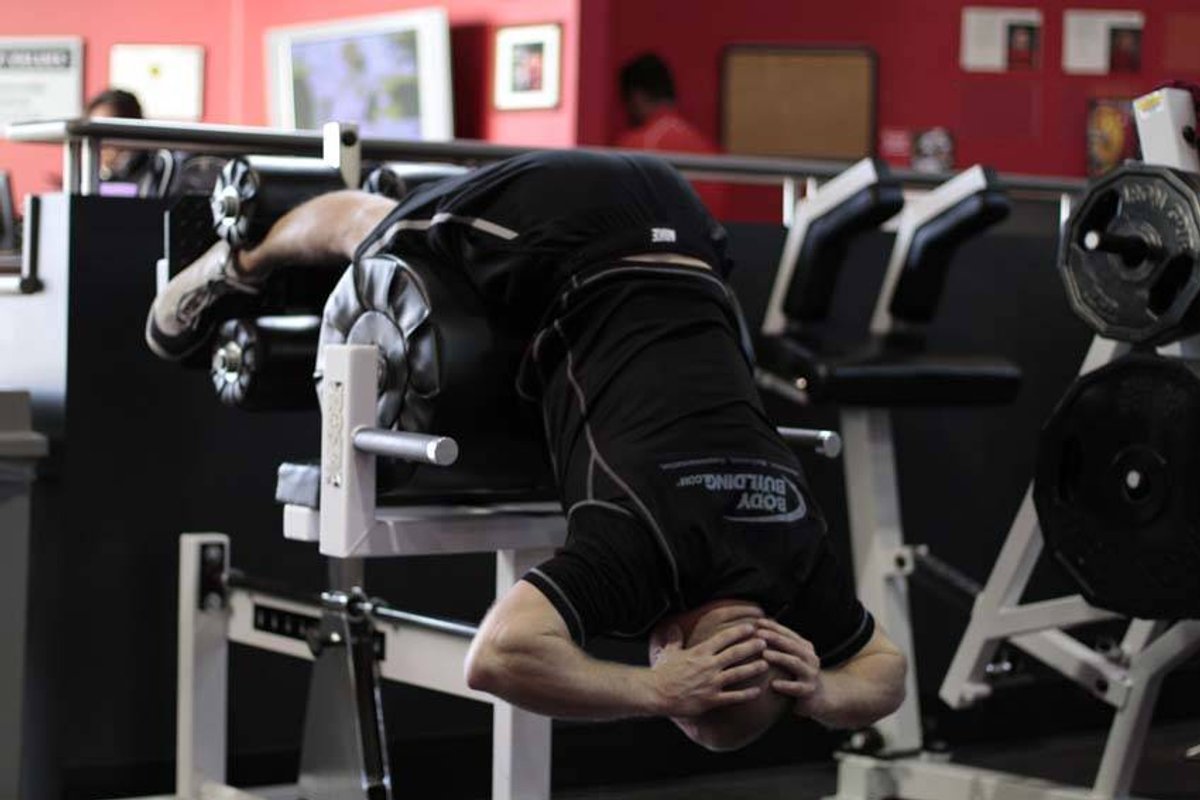
Glute-Ham Raise (GHR)
Safety Rating for 40+
Benefits for 40+
The glute-ham raise trains the hamstrings simultaneously in both knee flexion and hip extension function – a unique dual loading. The strong eccentric component promotes tendon strength, which is particularly valuable for over-40 trainees with reduced collagen regeneration. Beyer et al. (2015) showed eccentric training to be effective for tendinopathy – the glute-ham raise delivers this stimulus to the hamstring tendons automatically.
Form Cues
- On GHR bench: knees on pad, feet secured
- Lower torso forward under control – hamstrings brake eccentrically
- Pull back up through knee flexion – keep torso straight
Common Mistakes
- Hips break the line instead of maintaining the entire body as straight
- Lowering too fast without eccentric control – wastes the tendon adaptation stimulus
- Attempting full movement without sufficient strength – better partial reps than compensation
- Lower back takes over – sign of insufficient hamstring strength
Modifications
Beginner
Negative (eccentric) reps only: lower with control, push back up with arms from the floor. Band assistance around the chest for help in the concentric phase.
For Joint Issues
For knee issues: check pad position – knees must rest comfortably. Limit ROM to pain-free range. For back issues: don't hyperextend, keep core stable.
Advanced
Hold weight plate at chest for additional resistance. Tempo variation: 5-second eccentric. Superset with lying leg curls.
Scientific Basis
Trains hamstrings in both knee flexion and hip extension function simultaneously. Strong eccentric component promotes tendon strength – Beyer et al. (2015): eccentric training effective for tendinopathy. Tier 2 due to high intensity and difficulty.
Contraindications
- Acute hamstring strain or tear
- Severe knee problems where kneeling on the pad is painful
- Acute back problems – the exercise requires significant core stability
Related Exercises
Related Guide