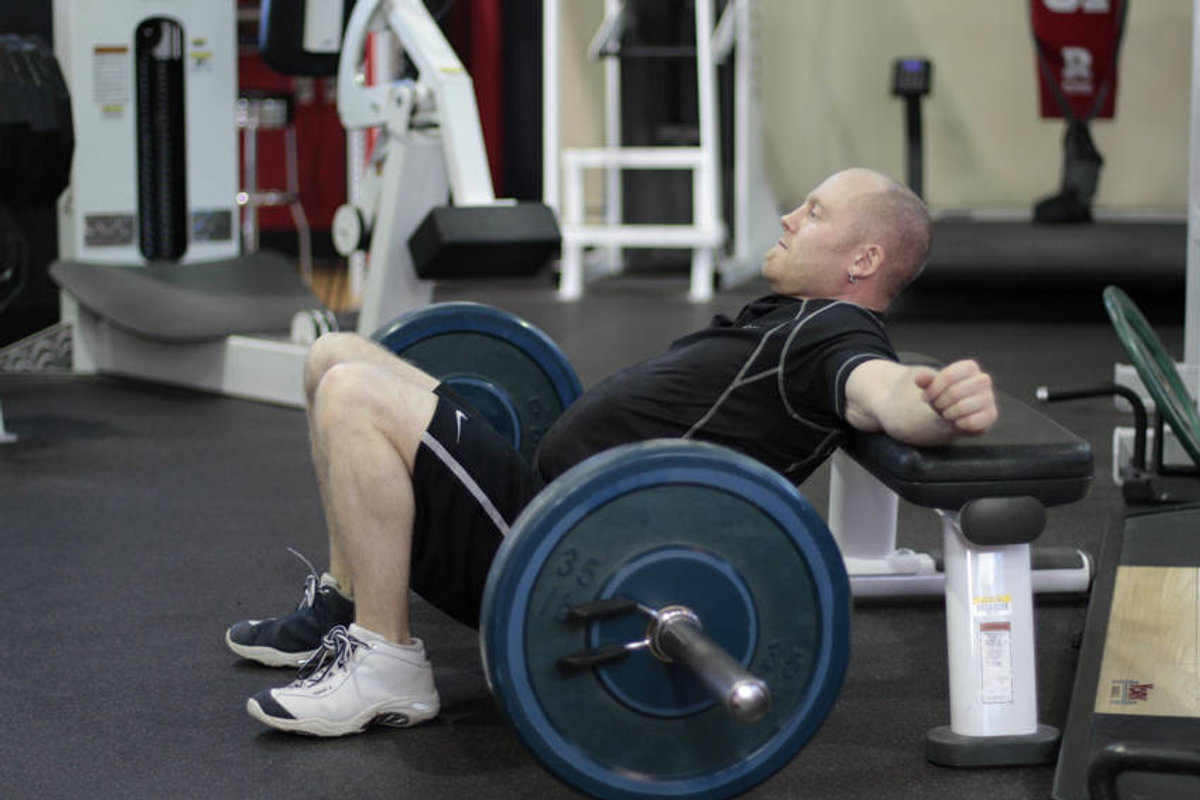
Barbell Hip Thrust
Safety Rating for 40+
Benefits for 40+
The barbell hip thrust provides maximum gluteus activation with minimal knee and spine risk – ideal for over-40 trainees. Strong glutes are critical for fall prevention, as they control hip extension and stabilize the pelvis. From the fifth decade onward, gluteal strength declines disproportionately, contributing to gait instability and back problems. The high SFR enables intense muscle work without systemic fatigue.
Form Cues
- Support upper back on bench, padded bar across hips
- Maximally extend hips – squeeze glutes hard at the top
- Knees at approximately 90°, shins vertical, gaze forward-down
Common Mistakes
- Hyperextending the lumbar spine instead of maximally squeezing the glutes at the top
- Feet too close to the bench, causing quadriceps to dominate instead of glutes
- No pad on the bar – causes painful pressure on the hip bone
- Tilting head back instead of directing gaze forward-down
Modifications
Beginner
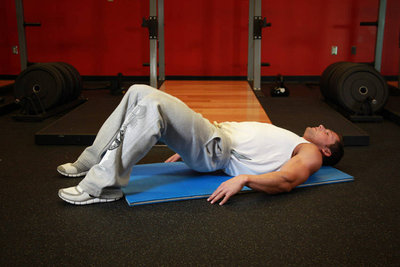
Start with the glute bridge on the floor (bodyweight). Then bilateral glute bridge with weight on hips. Only then transition to the bench.
For Joint Issues
For back issues: limit range of motion to pain-free zone, don't hyperextend. For knee issues: adjust foot position (further away = more hamstring, closer = more quadriceps). For hip issues: start with light weight and limited ROM.
Advanced
Pause hip thrust with 3-second hold at the top. Single-leg variation for asymmetry correction. Band around knees for additional gluteus medius activation.
Scientific Basis
Research lists hip thrusts as safe for knee issues – minimal knee loading. Maximum gluteus activation at the point of highest hip extension. High SFR since the lumbar spine stays neutral and no axial compression occurs.
Contraindications
- Acute lumbar spine problems aggravated by loaded hip extension
- Severe hip osteoarthritis with pain during hip extension
- Recent inguinal hernia or groin complaints
- Acute herniated disc with radiating pain
Related Exercises
Related Guides