EZ-Bar Curl
Safety Rating for 40+
Benefits for 40+
The angled grip of the EZ-bar reduces stress on wrist flexors and extensors, which is particularly relevant as tendon degeneration increases after 40. Allows heavier loads than dumbbells – important for progressive overload, which according to O'Bryan et al. (2022) improves both muscle strength and bone mineral density even in adults over 65. The bilateral nature makes the exercise time-efficient, advantageous for the often limited training time of the 40+ demographic.
Form Cues
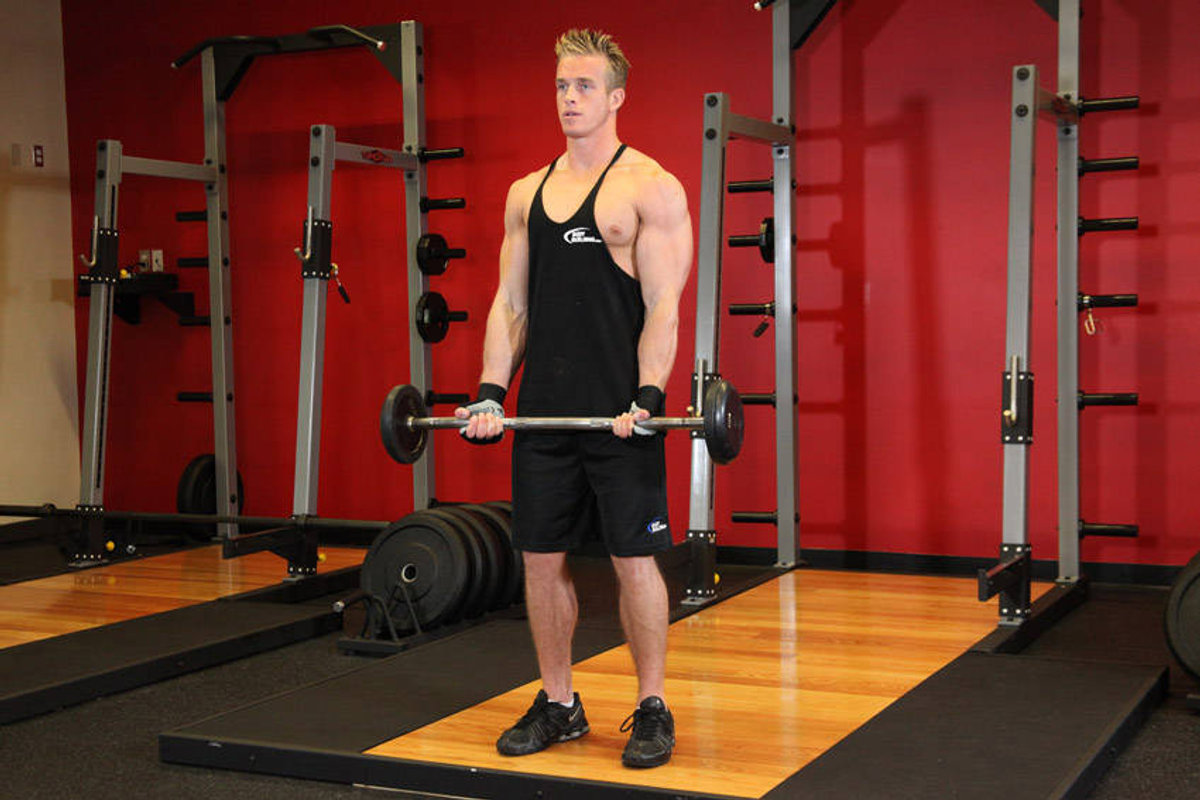
- Hold EZ-bar at middle grip – wrists in natural position
- Elbows at body, curl bar toward chest under control
- Full extension at bottom – don't hyperextend elbows
Common Mistakes
- Choosing straight barbell curl as alternative – unnecessary wrist stress for 40+, EZ-bar is always preferable
- Hyperextending elbows at the bottom – increased risk of elbow hyperextension with aging tendons
- Too narrow grip on the EZ-bar – shifts load to wrists instead of relieving them
- Prioritizing weight over technique – with reduced hormone levels after 40, clean volume work is more effective than ego lifts
Modifications
Beginner
Use just the EZ-bar without additional weight (approx. 7–10 kg). Focus on controlled 3-second eccentric, 12–15 reps.
For Joint Issues
For elbow issues: choose inner grip position (wider angle = less supination). If wrist issues persist despite EZ-bar: switch to neutral-grip hammer curls.
Advanced
Slow eccentrics (4–5 seconds) with moderate weight. Or pause reps: 2-second pause halfway down, then lower under control.
Scientific Basis
The EZ-bar relieves wrist stress through the slightly angled grip – significantly gentler than a straight barbell. Allows heavier loads than dumbbells while maintaining a wrist-friendly position. Best compromise of load and safety.
Contraindications
- Acute medial or lateral epicondylitis – any curl movement stresses the affected tendons
- Wrist ganglion – grip loading under weight can increase pressure on the ganglion
- Fracture or instability in the elbow joint – no loading until complete rehabilitation
Related Exercises
Related Guide