
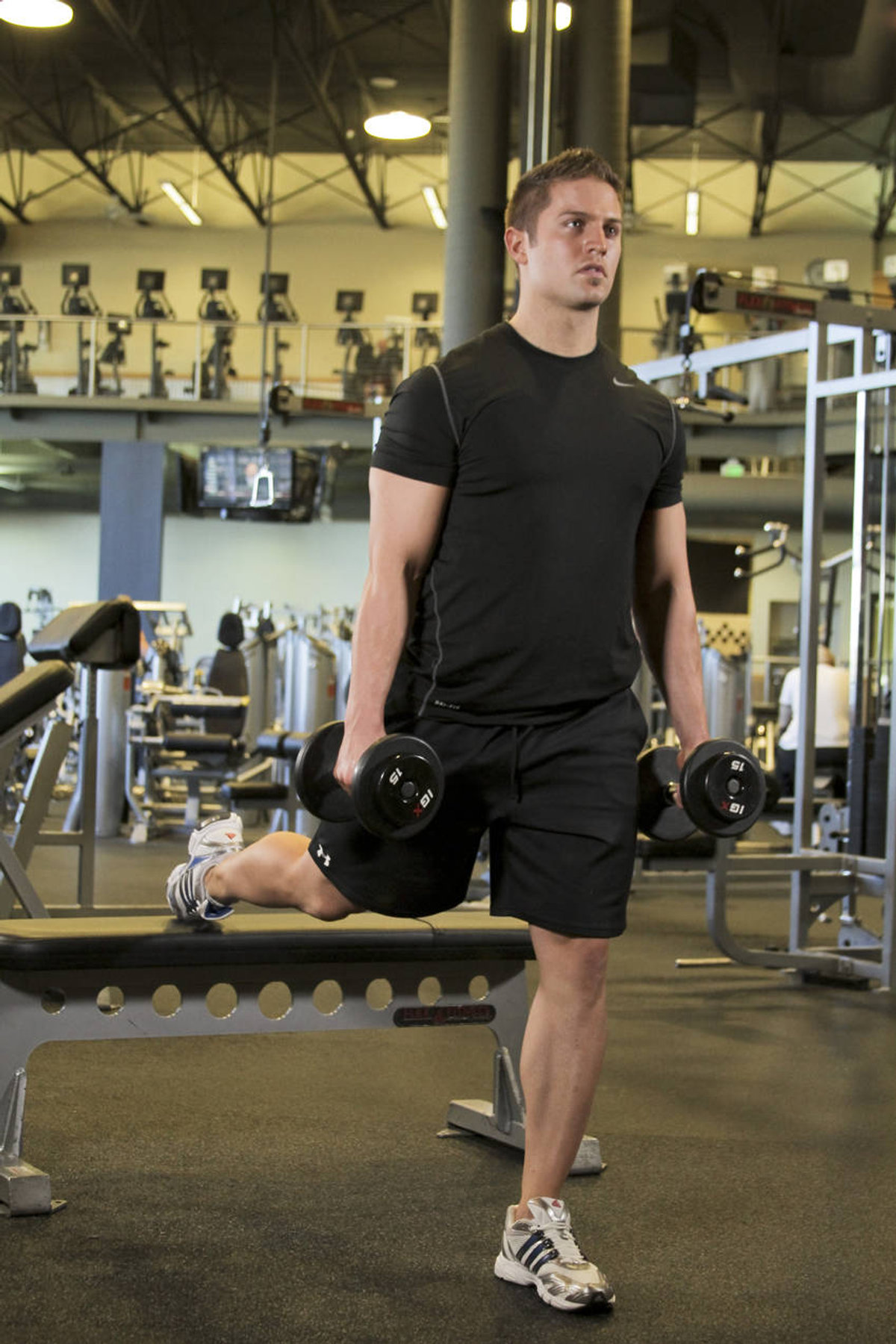
Dumbbell Split Squat
Safety Rating for 40+
Benefits for 40+
Split squats reveal muscular side-to-side imbalances that increase with age and elevate fall risk. The static position offers more stability than walking lunges, making it an excellent entry into single-leg training after 40. Unilateral exercises specifically train balance and proprioception, whose deterioration after 40 is a primary risk factor for falls and fractures in older age.
Form Cues
- Split stance, rear knee lowers toward the floor
- Upright torso, core engaged – 80% of weight on the front leg
- Front knee stays above the ankle – not past the toes
Common Mistakes
- Torso leans too far forward – shifts load from quadriceps to lower back
- Front knee shoots past the toes – increases patellofemoral shear forces
- Rear foot carries too much weight – reduces training stimulus on the front leg
- Knee caves inward (valgus) – common in over-40s due to weak hip abductors
Modifications
Beginner
Start without weight, one hand on a wall or rack for balance. Shorten stride length to reduce balance demands.
For Joint Issues
For knee issues: increase stride length (more hip, less knee flexion), lower rear knee only to pain-free depth. For back issues: use dumbbells at sides instead of barbell on shoulders.
Advanced
Bulgarian split squat with rear foot elevated on a bench for extended range of motion. Deficit split squat (front foot elevated) for maximum hip flexor stretch.
Scientific Basis
Research lists split squats as a Tier 2 progression. Static position is more stable than walking lunges – good entry into single-leg training. Reveals side-to-side imbalances and promotes balance, increasingly relevant from 40+.
Contraindications
- Acute knee joint inflammation in the front or rear knee
- Severe balance disorders without available support
- Acute hip flexor inflammation or injury
Related Exercises
Related Guides