
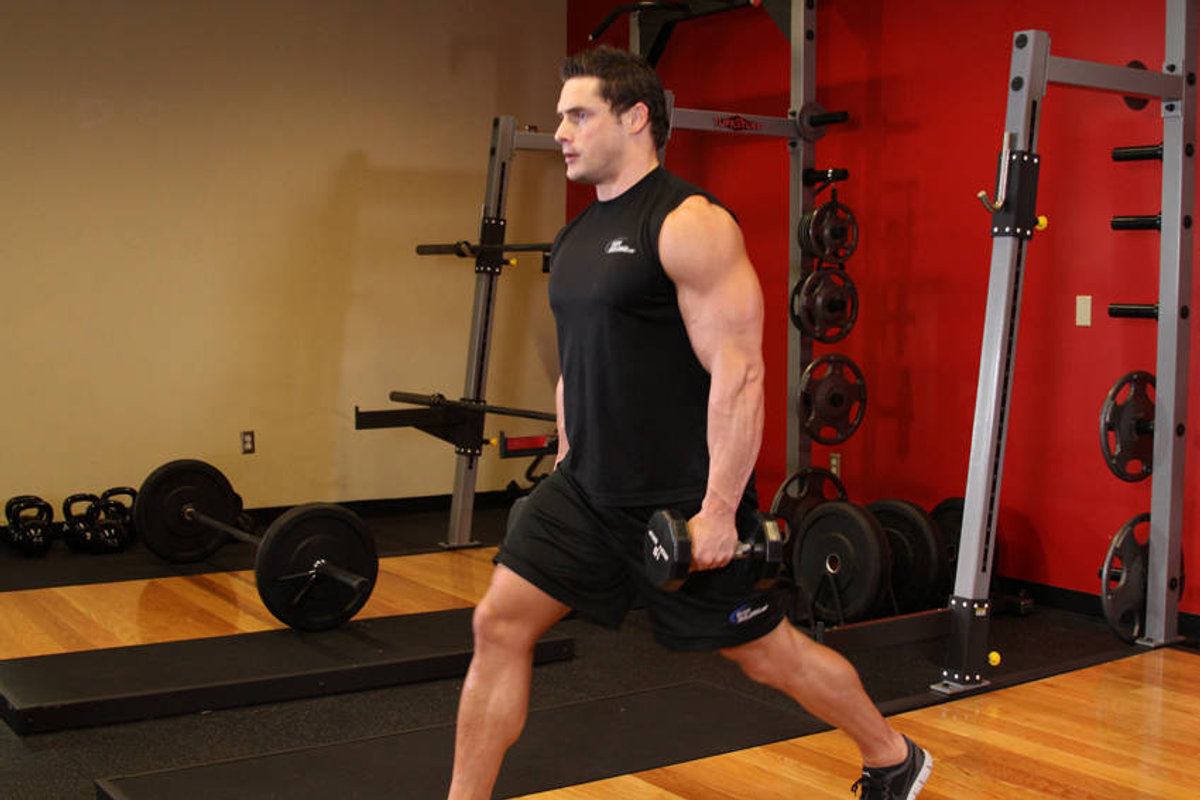
Dumbbell Forward Lunge
Safety Rating for 40+
Benefits for 40+
Forward lunges train a dynamic movement pattern that mirrors daily activities like climbing stairs or picking up objects. For over-40 trainees, they promote dynamic balance and proprioception that decline from the fifth decade onward. However, forward lunges stress the knee more than reverse variants due to the deceleration force – this should be considered with existing knee issues.
Form Cues
- Take a large step forward, lower under control
- Stop rear knee just above the floor, then push back
- Keep torso upright – don't lean forward
Common Mistakes
- Too short a stride, pushing knee flexion past the toes
- Torso tips forward – increases back stress and reduces glute activation
- Rear knee slams into the floor instead of controlled hover above it
- Poor knee tracking control – knee deviates medially, especially common in over-40s
Modifications
Beginner
Start without weight. Practice static lunges (split squats) before dynamic forward lunges. Hold onto a wall or rack for balance.
For Joint Issues
For knee issues: switch to reverse lunges (less knee shear). Increase stride length and don't lower rear knee all the way to the floor. For hip issues: shorten stride length.
Advanced
Walking lunges with dumbbells for increased balance demands. Deficit lunges (front foot on a riser) for extended range of motion.
Scientific Basis
Lunge pattern is Tier 2 per research – higher skill requirement due to dynamic balance. Trains quadriceps, glutes, and hamstrings functionally. Forward lunges stress the knee more than reverse variants.
Contraindications
- Acute knee joint inflammation – especially patellofemoral complaints
- Severe balance disorders without available support
- Acute hip joint or groin complaints
Related Exercises
Related Guides