
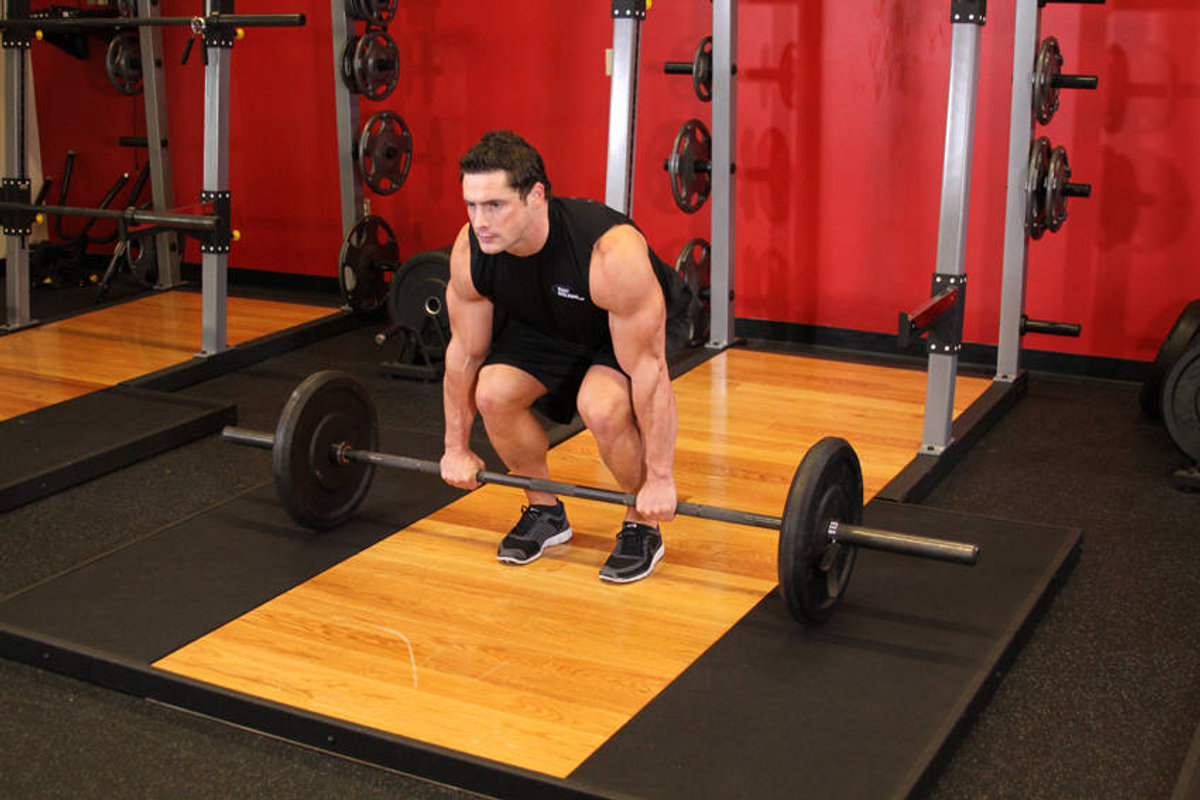
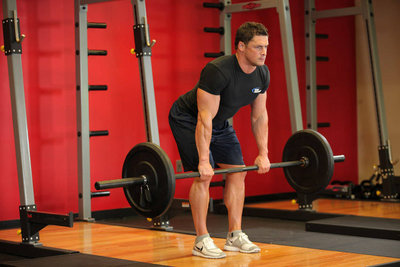
Conventional Deadlift
Safety Rating for 40+
Benefits for 40+
The conventional deadlift is the most intense full-body exercise offering maximum osteogenic stimulus for bone density – a postmenopausal meta-analysis (2025, 17 RCTs) showed that high-intensity training at ≥70% 1RM significantly improves BMD at hip and femoral neck. For experienced 40+ trainees with proven technique, the exercise provides unmatched functional transfer to daily loading demands. However, the low SFR and high systemic fatigue require strict autoregulation and conservative progression.
Form Cues
- Feet hip-width, bar over midfoot, back ALWAYS stays neutral
- Chest up, engage lats ('bend the bar'), drive weight through legs
- Don't jerk – smooth, controlled pull from the floor
Common Mistakes
- Rounding back – ABSOLUTELY NON-NEGOTIABLE for 40+; McGill's cadaveric studies show repeated spinal flexion under load damages discs
- Jerking from the floor – creates extreme peak loads on spine and tendons that are less resilient after 40
- Increasing weight before technique is perfect at lighter loads – the low SFR makes form breakdown especially risky
- Heavy deadlifting too frequently (>1x/week) – high systemic fatigue requires at least 72h recovery for compound hinge exercises after 40
Modifications
Beginner
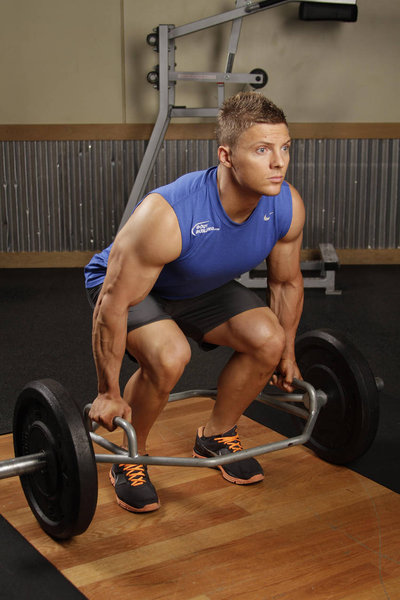
NOT recommended for beginners. Use trap bar deadlift as a safer Tier 1 alternative. If conventional deadlift is the goal: first build solid technique base with Romanian deadlift and trap bar over at least 3–6 months.
For Joint Issues
For back issues: CONTRAINDICATED – McGill's spine-sparing principles clearly advise against loaded flexion. Trap bar deadlift as safer alternative (Swinton et al. showed reduced peak loads). For persistent lumbar pain: hip thrust or leg press as alternatives. NO conventional deadlifts with active disc problems.
Advanced
Periodized usage: maximum 1x/week heavy (RPE 8), remaining hinge work via RDL or trap bar. Deficit deadlifts for off-the-floor strength. Pause deadlifts (2 sec hold at knee height). Heavy singles only during peaking phases.
Scientific Basis
Full-body exercise with highest systemic fatigue. Research classifies conventional deadlifts as Tier 2: lower SFR than trap bar variant, requires form assessment. For 40+ only with solid technique and supervision. Neutral spine is non-negotiable.
Contraindications
- Acute or chronic herniated disc – the combination of axial loading and potential flexion is the highest risk profile per McGill's research
- Spinal canal stenosis – axial compression can provoke neurological symptoms
- Spondylolisthesis – shear forces during deadlifting can worsen instability
- Uncontrolled hypertension – the Valsalva maneuver during maximal lifts creates extreme blood pressure spikes
- Acute hamstring or gluteal tendon pathology – high tensile load can worsen partial tears
- Severe wrist arthritis making mixed grip or double-overhand painful
- Advanced osteoporosis without medical clearance – vertebral fracture risk under maximal axial loading
Related Exercises
Related Guides