Single-Leg Glute Bridge
Safety Rating for 40+
Benefits for 40+
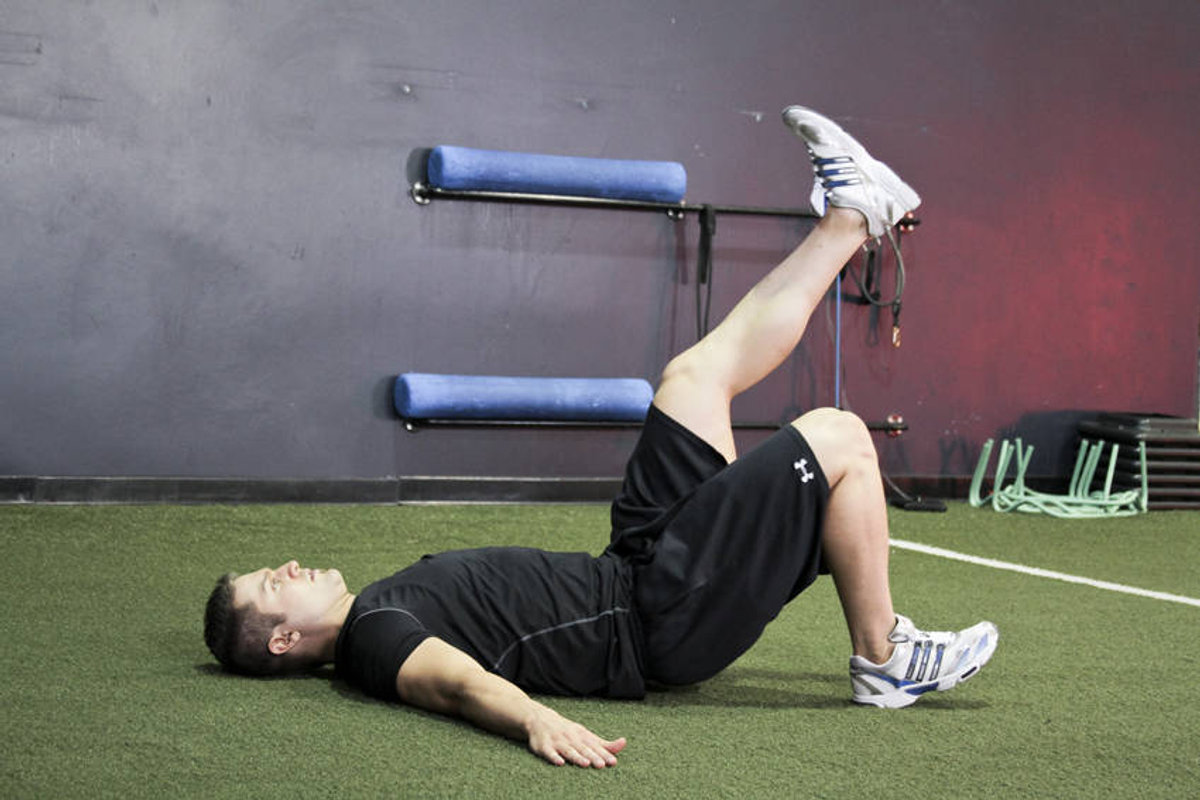
The single-leg glute bridge is a safe unilateral progression that reveals and corrects muscular side-to-side imbalances – these asymmetries increase with age and elevate fall risk. The enhanced gluteus medius activation for hip stabilization is particularly valuable after 40, as weak hip abductors are a major factor in knee problems and gait instability.
Form Cues
- Like glute bridge, but one leg extended in the air or resting on the knee
- Keep hips level – don't let them tilt to one side
- Hold at top for 1–2 seconds, then lower under control
Common Mistakes
- Hip tilts toward the raised leg side – sign of weak gluteus medius
- Lumbar spine rotates – the pelvis must stay level
- Moving too quickly without stabilization phase at the top
- Raised leg used as momentum
Modifications
Beginner
First master the bilateral glute bridge reliably. Then initially rest the raised leg on the opposite knee instead of holding it in the air.
For Joint Issues
For knee issues: adjust stance leg position (foot closer or further). For back issues: don't hyperextend and monitor for pelvic rotation.
Advanced
Place weight on hips. Stance foot on an elevation for extended ROM. 5-second hold at the top.
Scientific Basis
Unilateral progression of the glute bridge – reveals side imbalances and requires more gluteus medius activation for hip stabilization. Research recommends single-leg exercises as safe for knee issues – same principle applies here.
Contraindications
- Acute severe back or hip pain
- Significant muscular imbalances causing pain – train bilaterally first
- Recent hip surgery without clearance
Related Exercises
Related Guide