Pull-Up
Safety Rating for 40+
Benefits for 40+
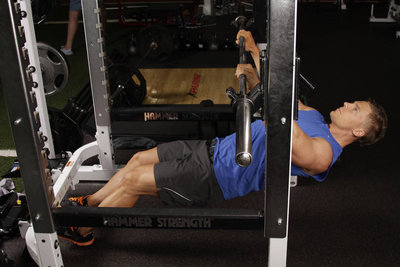
Pull-ups are the gold standard for functional pulling strength and an important marker for upper body fitness with age. The ability to pull one's own body weight correlates with overall functional capacity and fall prevention. The high lat activation combined with trunk stabilization trains exactly the muscle groups that counteract age-related postural deterioration.
Form Cues
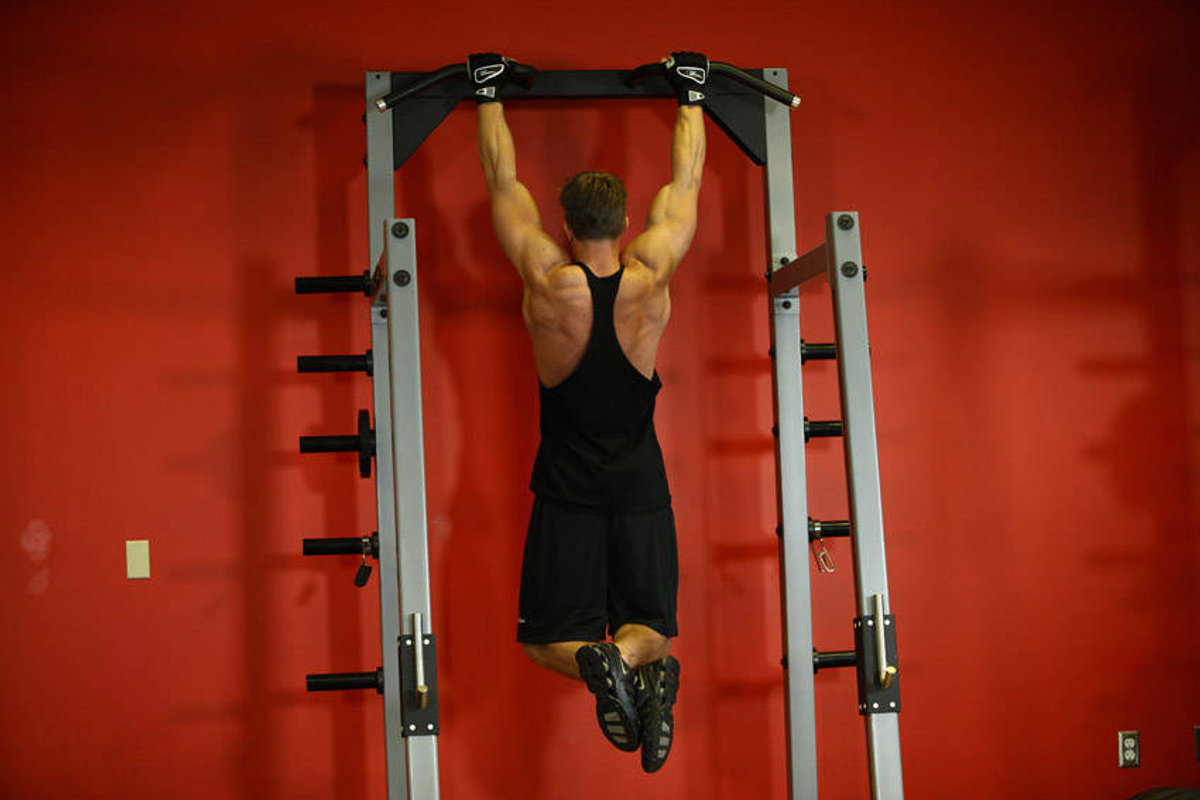
- Pronated grip (palms facing away), slightly wider than shoulder-width
- Actively depress shoulder blades before bending arms
- Controlled movement – no kipping or swinging
Common Mistakes
- Using kipping or CrossFit swing – creates dangerous peak loads on shoulder joints, especially with degenerative changes after 40
- Grip too wide – overloads shoulder capsule and supraspinatus
- Only half reps without full arm extension at the bottom
- Pushing head forward instead of bringing chest to bar – cervical spine misloading
Modifications
Beginner
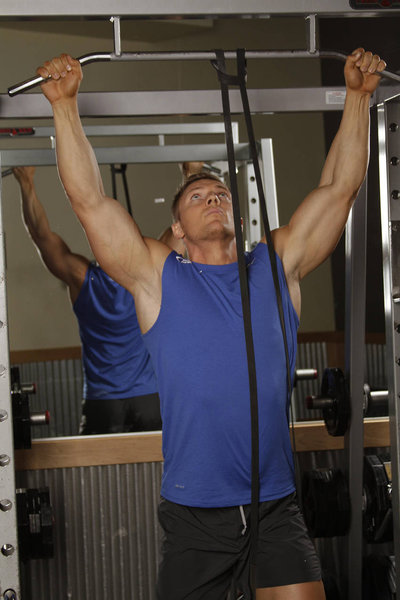
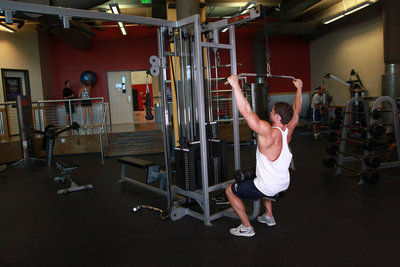
Band-assisted pull-ups with progressively lighter bands. Alternative: eccentric pull-ups (jump up, lower for 5–8 sec). Lat pulldowns offer comparable hypertrophy with lower risk.
For Joint Issues
For back or shoulder issues: prefer neutral-grip lat pulldown. Avoid full dead hang if it causes pain – start from slight flexion. Reduce grip width to shoulder-width.
Advanced
Weighted pull-ups (dip belt, 3–6 reps). Archer pull-ups as unilateral progression. Tempo training: 2 sec up, 1 sec hold, 4 sec eccentric.
Scientific Basis
Pronated grip emphasizes the latissimus more than supinated, with less biceps involvement. Tier 2 due to high strength-to-body-weight demands and shoulder stress in the overhead position.
Contraindications
- Active shoulder impingement or SLAP lesion
- Unstable shoulder joints with subluxation tendency
- Acute cervical spine issues or herniated disc in cervical region
- Severe acromioclavicular (AC) joint arthritis
Related Exercises
Related Guide