
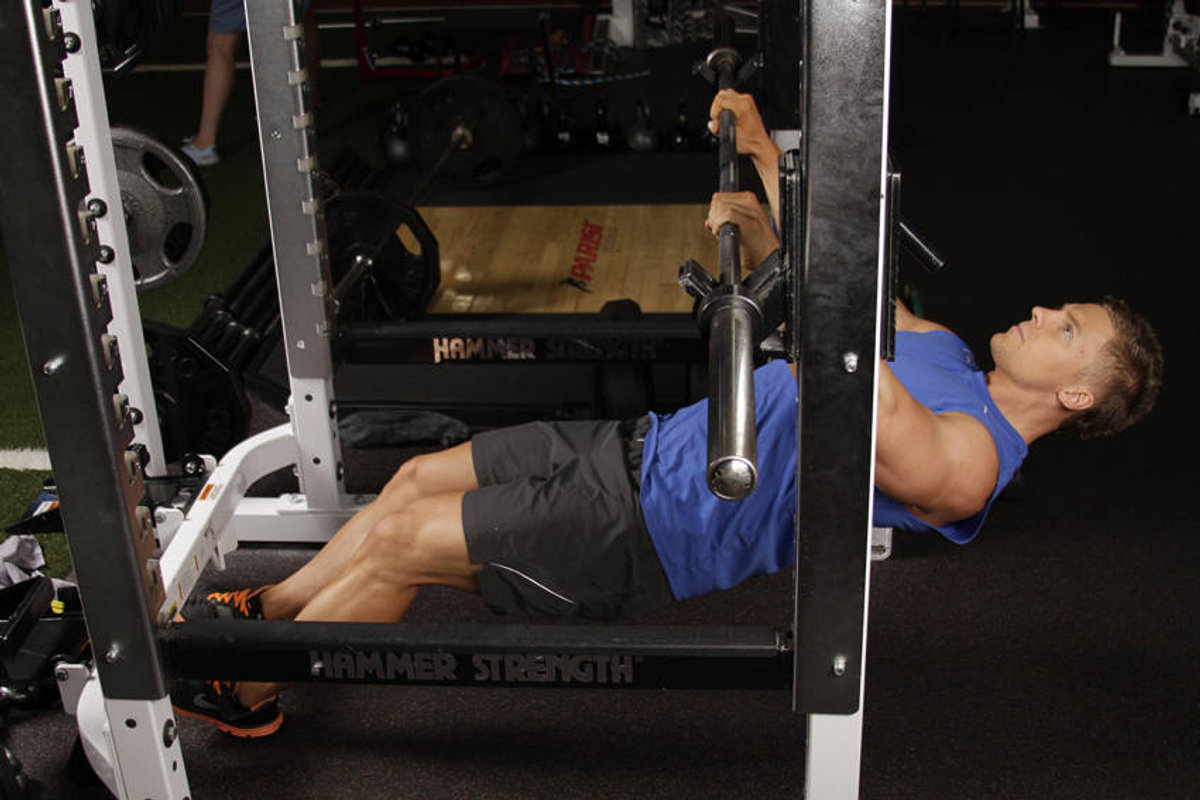
Inverted Row
Safety Rating for 40+
Benefits for 40+
The inverted row is the perfect entry exercise for 40+ trainees who don't yet have the strength for pull-ups. The self-limiting bodyweight load makes overloading virtually impossible – especially valuable for the more sensitive connective tissue after 40. The infinitely scalable body angle allows exact adaptation to individual fitness levels and respects the anabolic resistance occurring from the fifth decade of life.
Form Cues
- Hang from a bar or suspension trainer, keep body straight
- Pull chest to bar – shoulder blades together
- Control difficulty via body angle: steeper = easier
Common Mistakes
- Letting hips sag – reduces core activation and loads the lumbar spine
- Pulling only with arms without scapular retraction – shifts stimulus to biceps
- Pushing head forward instead of bringing chest to bar – cervical spine stress
- Increasing difficulty too fast by lowering body angle – tendons need more adaptation time after 40
Modifications
Beginner
High body angle (nearly standing upright) with bar at chest height. TRX or rings enable more natural joint angles. Target 8–12 reps, gradually lower angle over weeks.
For Joint Issues
For back issues: maintain steep body angle and focus on a tight body line. For wrist pain: use rings or suspension trainer for neutral grip. Keep core active to protect lumbar spine.
Advanced
Feet elevated on bench or box for flatter angle. Weight vest for additional load. Single-arm inverted rows for maximum unilateral challenge. Tempo: 3 sec concentric, 3 sec eccentric.
Scientific Basis
Horizontal counterpart to pull-ups with self-limiting load. Body angle allows infinite regression – perfect for beginners and as preparation for pull-ups. No equipment needed beyond a bar.
Contraindications
- Acute wrist injuries making gripping the bar painful
- Severe shoulder instability in the horizontal pulling position
- Acute lumbar spine issues aggravated by full-body tension
Related Exercises
Related Guides