
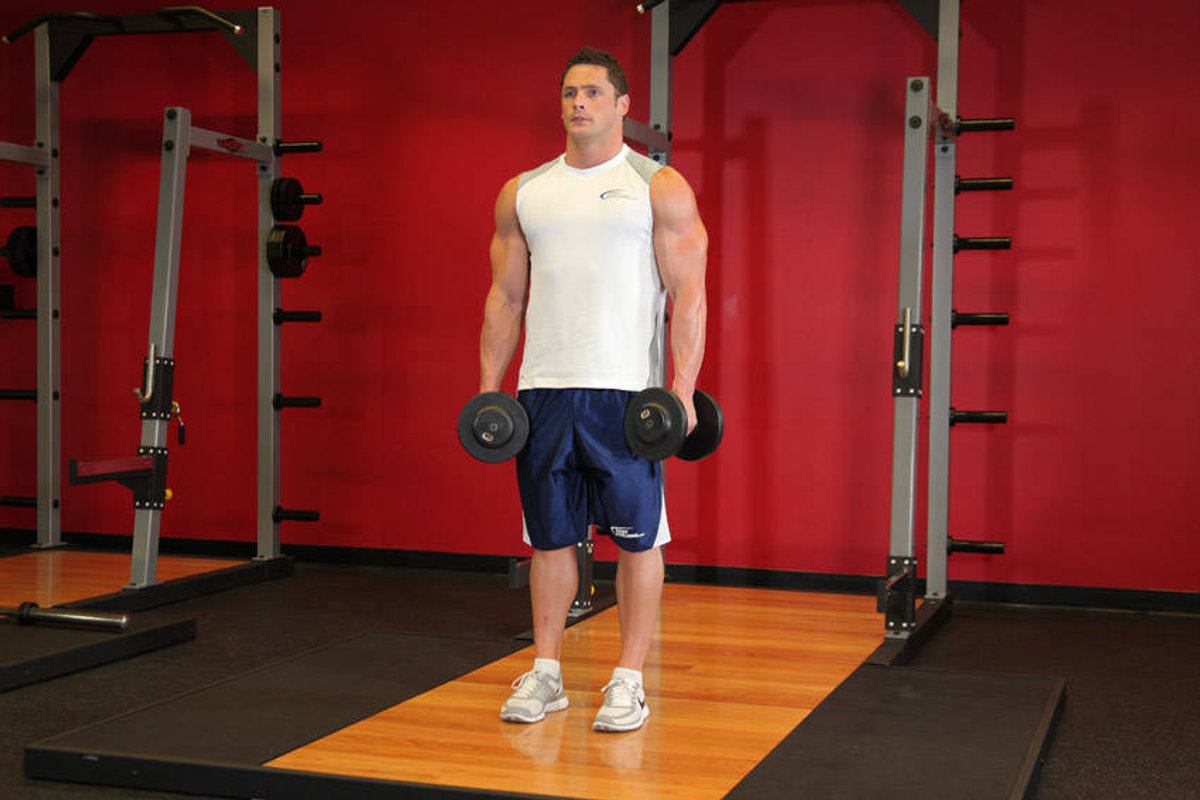
Dumbbell Shrug
Safety Rating for 40+
Benefits for 40+
Dumbbell shrugs strengthen the upper trapezius, crucial for shoulder stabilization and neck posture – two areas that increasingly cause problems after 40 due to desk work and age-related postural deterioration. The simple movement with high SFR and minimal systemic fatigue enables targeted volume accumulation without taxing recovery capacity. The lateral dumbbell position is more joint-friendly than barbell shrugs in front of the body.
Form Cues
- Hold dumbbells at sides, shrug shoulders straight up
- Hold at the top for 1–2 seconds and squeeze
- Don't roll the shoulders – pure up-down movement
Common Mistakes
- Rolling shoulders instead of pulling straight up – unnecessarily stresses the AC joint and rotator cuff
- Too heavy weight with shortened ROM – drastically reduces trap activation
- Pushing head forward during the shrug – loads the cervical spine
- Biceps involvement through arm bending – steals training stimulus from the trapezius
Modifications
Beginner
Light dumbbells (8–12 kg) with full ROM. 2 second hold at the top for maximum contraction. 12–15 reps per set.
For Joint Issues
For back issues: shrugs are already one of the most back-friendly exercises. Alternatively perform seated to completely unload the lumbar spine. For cervical issues: reduce weight and consciously maintain neutral head position.
Advanced
Power shrugs with controlled momentum for heavier loads. Behind-the-back shrugs for altered force vector. Farmer's walk as dynamic trap loading with additional core and grip training.
Scientific Basis
Simple, safe isolation of the upper trapezius. Dumbbells allow a natural arm position at the sides. High SFR with minimal systemic fatigue – ideal for volume accumulation.
Contraindications
- Acute cervical spine issues or cervical syndrome – muscle contraction directly at the neck can worsen symptoms
- Severe AC joint arthritis – the compressive force of the shrug movement loads the AC joint
- Thoracic outlet syndrome – shoulder elevation can increase neurovascular compression
Related Exercises
Related Guide