Decline Dumbbell Bench Press
Safety Rating for 40+
Benefits for 40+
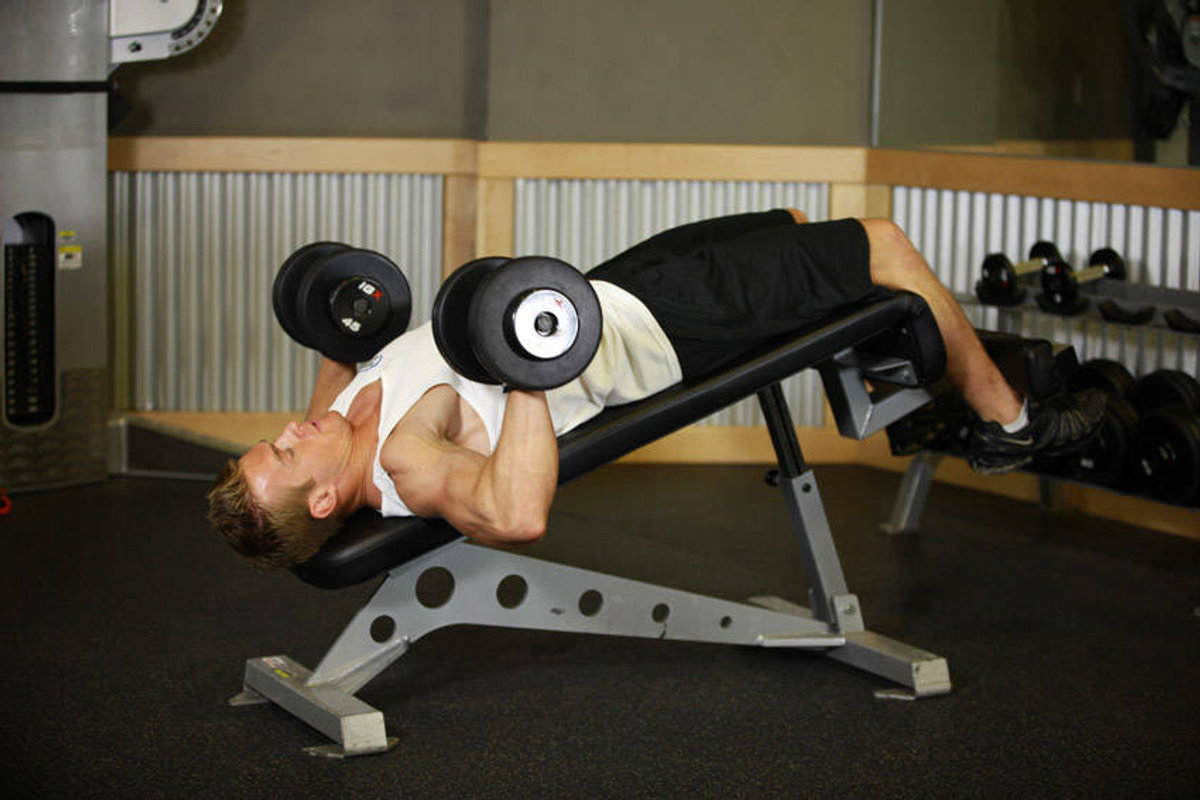
Reduces shoulder stress compared to flat and incline pressing – a crucial advantage for 40+ with shoulder impingement history. The decline position decreases shoulder flexion and thereby reduces subacromial pressure. Simultaneously emphasizes the lower chest for more complete chest development. Unilateral dumbbell paths correct side-to-side imbalances built up over decades.
Form Cues
- Decline bench (15–30°), legs firmly secured
- Lower dumbbells under control to lower chest
- Don't start too heavy — the head-down position takes adjustment
Common Mistakes
- Too steep decline (above 30°) – disproportionately increases blood pressure to the head; especially dangerous for 40+ with hypertension risk
- Legs not securely fixed – sliding in the head-down position is a serious accident risk
- Weight too heavy in the unfamiliar position – the strength curve differs from flat bench pressing
- Unsafely placing dumbbells down at the end – setting down is harder in decline position; plan ahead
Modifications
Beginner
First master flat dumbbell bench press. Introduce decline variation only after 3+ months of training experience. Start with minimal decline angle (10–15°).
For Joint Issues
For back issues: avoid decline position – lumbar spine pressure is altered in the negative incline. Instead use dips (with caution) or cable crossovers for lower chest. For shoulder issues: this exercise is already one of the most shoulder-friendly pressing variations.
Advanced
Pause reps (2 sec at chest). Tempo variation (4 sec eccentric) for maximum hypertrophy. Single-arm variation for core stability and asymmetry correction.
Scientific Basis
Decline position emphasizes lower chest and reduces shoulder stress compared to flat and incline pressing. Tier 2 due to the unfamiliar position and increased blood pressure to the head from the negative incline — caution with hypertension.
Contraindications
- Uncontrolled hypertension – head-down position significantly increases blood pressure to the head
- Glaucoma – increased intraocular pressure in decline position
- Severe gastroesophageal reflux disease (GERD) – head-down position worsens reflux
- Acute lower back problems
- Dizziness tendency or vestibular disorders
Related Exercises
Related Guides