
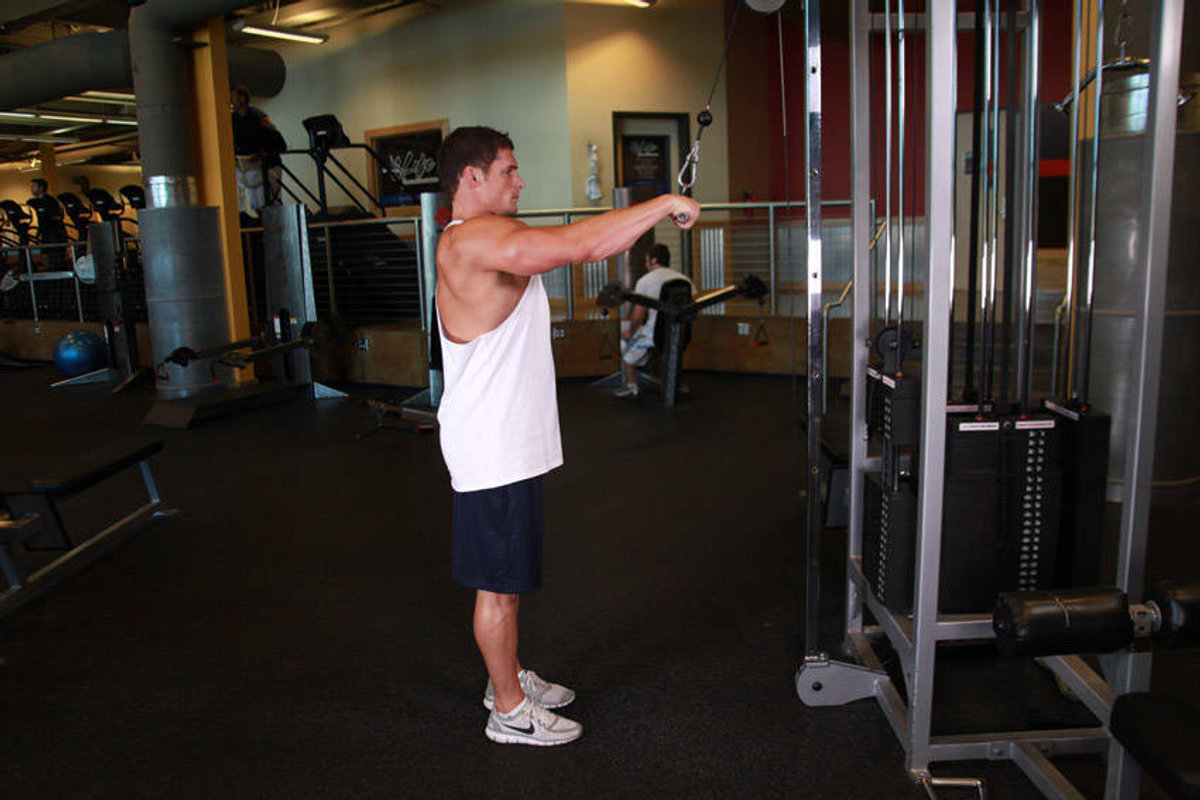
Straight-Arm Pulldown
Safety Rating for 40+
Benefits for 40+
As a pure isolation exercise, the straight-arm pulldown generates maximum lat stimulus with minimal systemic fatigue – crucial for 40+ trainees with limited recovery capacity. The exercise allows targeted volume accumulation without overloading joints, particularly relevant given slowed collagen turnover starting in the fifth decade of life. Ideal for combating age-related sarcopenia in the latissimus without biceps or lower back being the limiting factor.
Form Cues
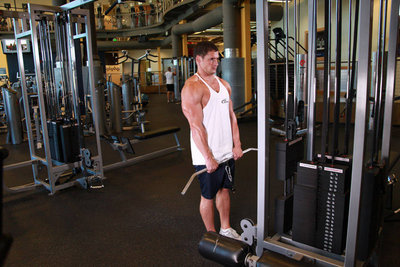
- Guide bar or rope with straight arms down to hip level
- Slight forward lean, keep shoulders depressed
- Work only from the shoulder joint – arms stay extended
Common Mistakes
- Bending arms and turning the exercise into a lat pulldown – eliminates targeted lat isolation
- Choosing too heavy weight and working with the entire upper body – loads the lumbar spine
- Shrugging shoulders up instead of keeping them actively depressed
- Movement from the lower back instead of purely from the shoulder joint – creates unnecessary lumbar stress
Modifications
Beginner
Use rope attachment instead of bar for more natural hand position. Very light weight to learn pure shoulder extension. As pre-activation before compound pulls with 2 sets of 15 reps.
For Joint Issues
For back issues: stand more upright with less forward lean. Reduce weight until the torso stays stable without compensating. Alternatively, single-arm at the cable for better body control.
Advanced
Eccentric emphasis with 4-second return. Superset with lat pulldowns for maximum lat fatigue (pre-exhaust principle). Single-arm execution to increase range of motion.
Scientific Basis
Pure lat isolation without biceps involvement – perfect for targeted volume accumulation. High SFR with minimal systemic fatigue. Ideal as pre-activation before compounds or as a finisher.
Contraindications
- Acute shoulder injuries, especially issues with the long head of the biceps tendon
- Inflammatory conditions in the shoulder joint (bursitis, tendinitis)
- Unstable lumbar spine that doesn't allow a firm stance under cable tension
Related Exercises
Related Guide