Standing Cable Wood Chop
Safety Rating for 40+
Benefits for 40+
The cable wood chop trains functional rotational power through the diagonal movement chain – a movement pattern that remains indispensable in daily life after 40 (lifting objects, turning around, athletic movements). Unlike Russian twists, which McGill has identified as harmful to spinal discs, rotation here occurs correctly through the hips and thoracic spine while the lumbar spine stays stable. The constant cable resistance enables precise load control – ideal for the conservative progression required with age-related connective tissue remodeling. Simultaneously, the standing execution promotes balance control and fall prevention.
Form Cues
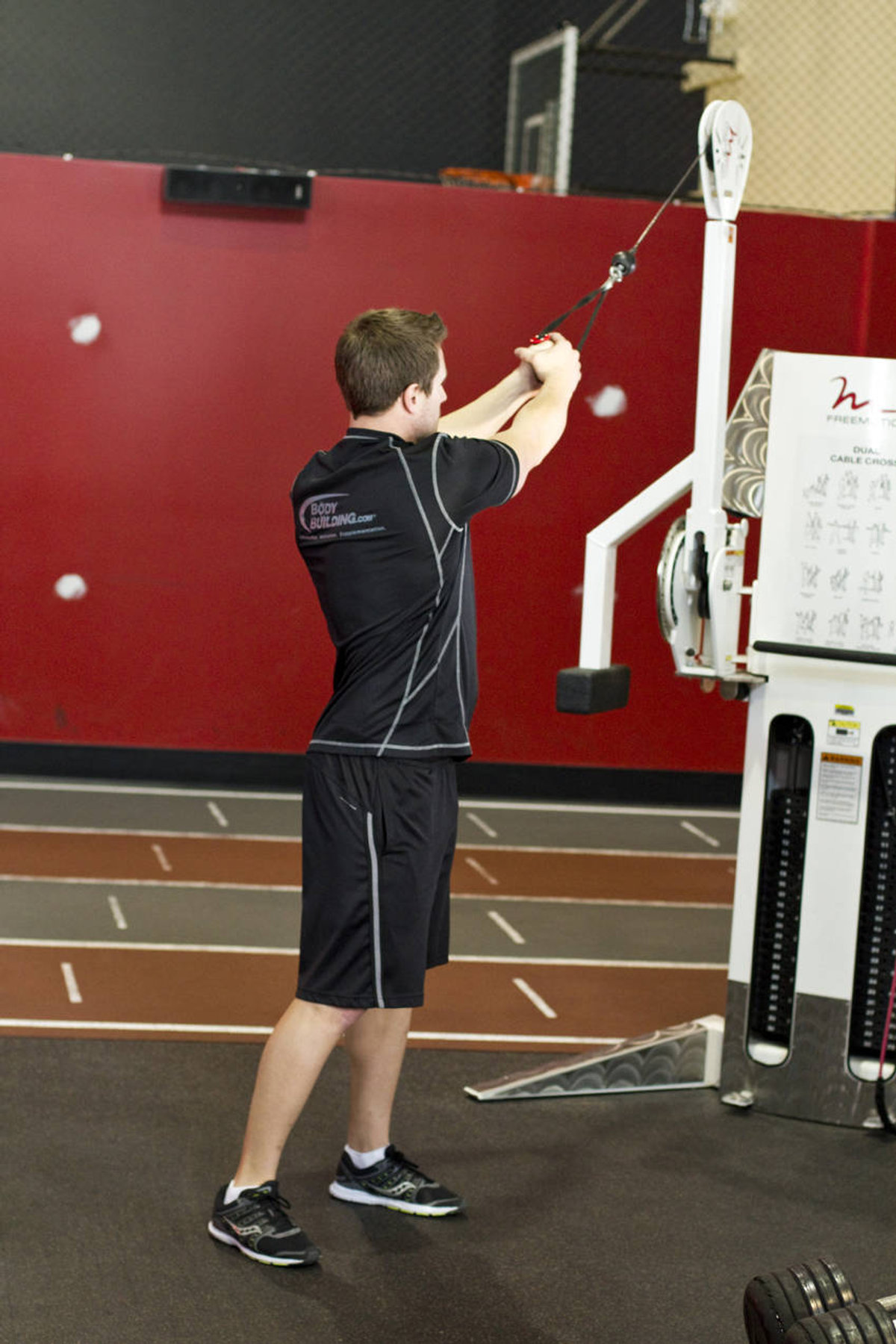
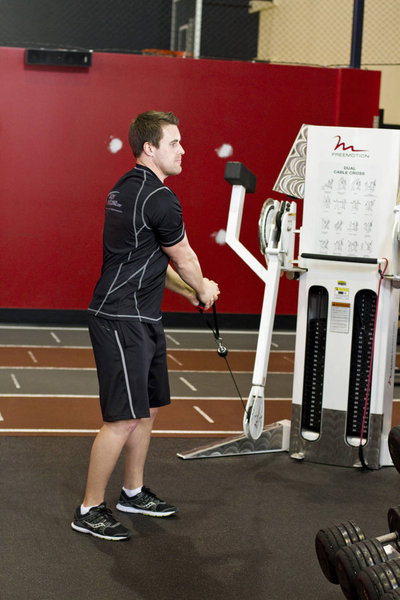
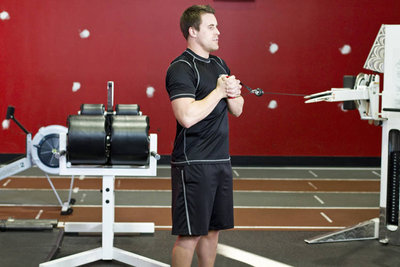
- Cable high, stand sideways to tower, grip with both hands
- Pull diagonally down toward opposite hip – arms extended
- Rotation from hips and thoracic spine – lumbar spine stays stable
Common Mistakes
- Rotating from the lumbar spine instead of hips and thoracic spine – the most common and dangerous mistake, especially for 40+ with degenerative lumbar changes
- Bending arms instead of keeping them extended – shortens the lever and shifts stimulus from core to arms
- Too fast, uncontrolled movement – quality of rotation matters more than speed
- Not anchoring feet firmly on the ground – without a stable base the entire body rotates instead of just the upper body
Modifications
Beginner
Use half the rotation angle and choose very light weight. Alternatively perform kneeling to isolate the hip rotation component.
For Joint Issues
For back issues: choose minimal rotation angle and focus on lumbar stability. For shoulder issues: keep arms slightly bent and limit ROM. If painful, switch to Pallof press.
Advanced
Perform single-leg for maximum stability demand. Slower tempo (3 seconds per phase) or pause at end point for increased isometric demand.
Scientific Basis
Functional rotational power through diagonal movement chain. Cable resistance is constant. Critical: rotation occurs through hips and thoracic spine, the lumbar spine remains as a stable anchor – this distinguishes wood chops from Russian twists.
Contraindications
- Acute disc herniation – rotational loading is contraindicated with disc pathologies
- Spinal stenosis with rotational pain or radicular symptoms
- Acute shoulder instability provoked by the diagonal pulling movement
- Severe balance disorders preventing a safe stance under rotational loading
Related Exercises
Related Guide