
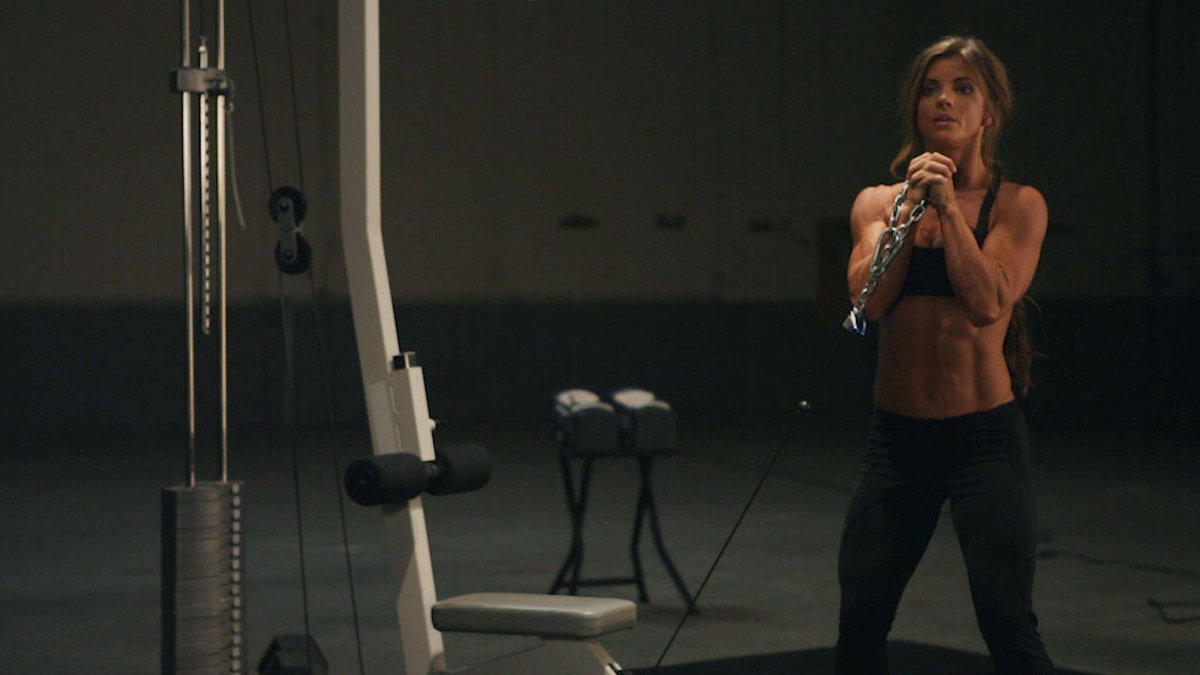
Pallof Press
Safety Rating for 40+
Benefits for 40+
The Pallof press is explicitly listed as a safe exercise for spinal issues in the evidence-based safety matrix – a crucial criterion for 40+. As an anti-rotation exercise, it trains the core in its primary everyday function: preventing rotation, not creating it. This is especially relevant after 40, as discs become more susceptible to rotational loads due to dehydration and height loss. Cable resistance enables precise load control in small increments – ideal for the autoregulated progression necessary with age-related slowed connective tissue adaptation.
Form Cues
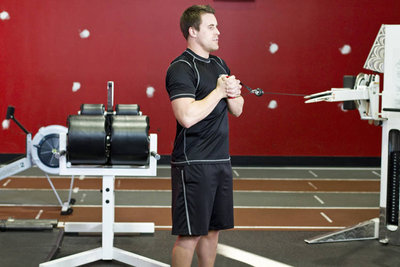
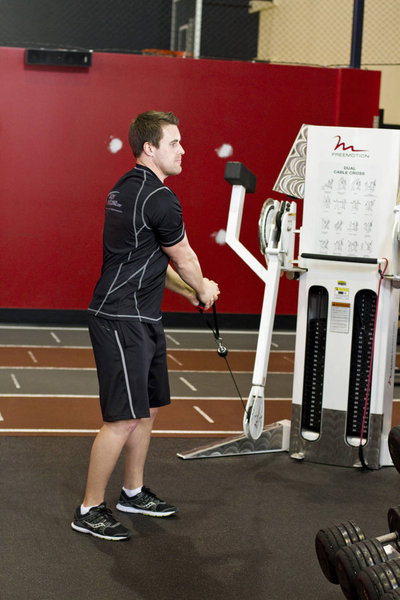
- Stand sideways to cable, grip at chest height with both hands
- Press handle straight forward – resist the lateral pull
- Hold 2–3 sec at full extension, return under control
Common Mistakes
- Rotating arms to the side instead of pressing straight forward – completely corrupts the anti-rotation stimulus
- Choosing too heavy a weight and allowing the trunk to rotate – especially dangerous for 40+ with disc issues
- Performing too quickly without pausing at end position – the 2–3 second hold is essential for the stabilizing effect
- Stance too narrow, causing hips to shift laterally instead of engaging the core
Modifications
Beginner
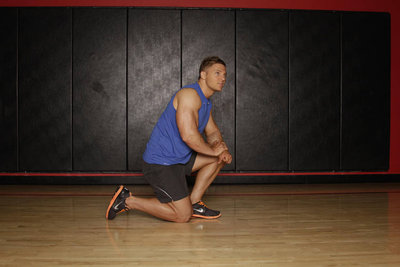
Perform kneeling to simplify the leverage. Alternatively, stand closer to the cable tower to reduce the rotational resistance.
For Joint Issues
For shoulder issues: adjust grip height (navel level instead of chest level). For back issues: reduce hold time, choose lighter weight, focus on pelvic position.
Advanced
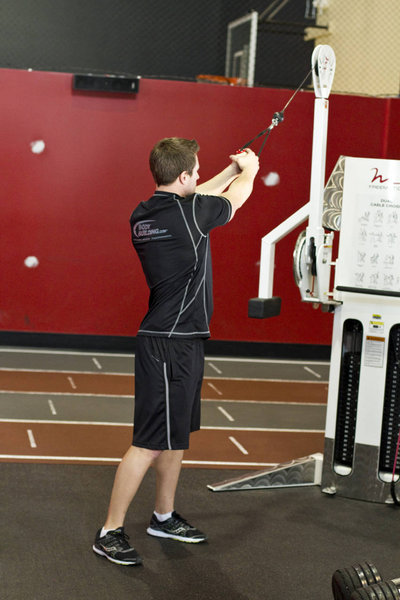
Perform in single-leg stance for additional stability demand. Alternatively: Pallof press with overhead reach or lunge position for increased core demand.
Scientific Basis
Research explicitly lists Pallof Press as a safe exercise in the safety matrix for spinal issues. Anti-rotation exercise: the core works to PREVENT rotation – not create it. This matches the core's primary function in daily life and sport.
Contraindications
- Acute disc herniations with radicular symptoms – rotational resistance may aggravate symptoms
- Acute shoulder instability provoked by the pressing movement
- Severe balance disorders that make a safe stance impossible
Related Exercises
Related Guide