
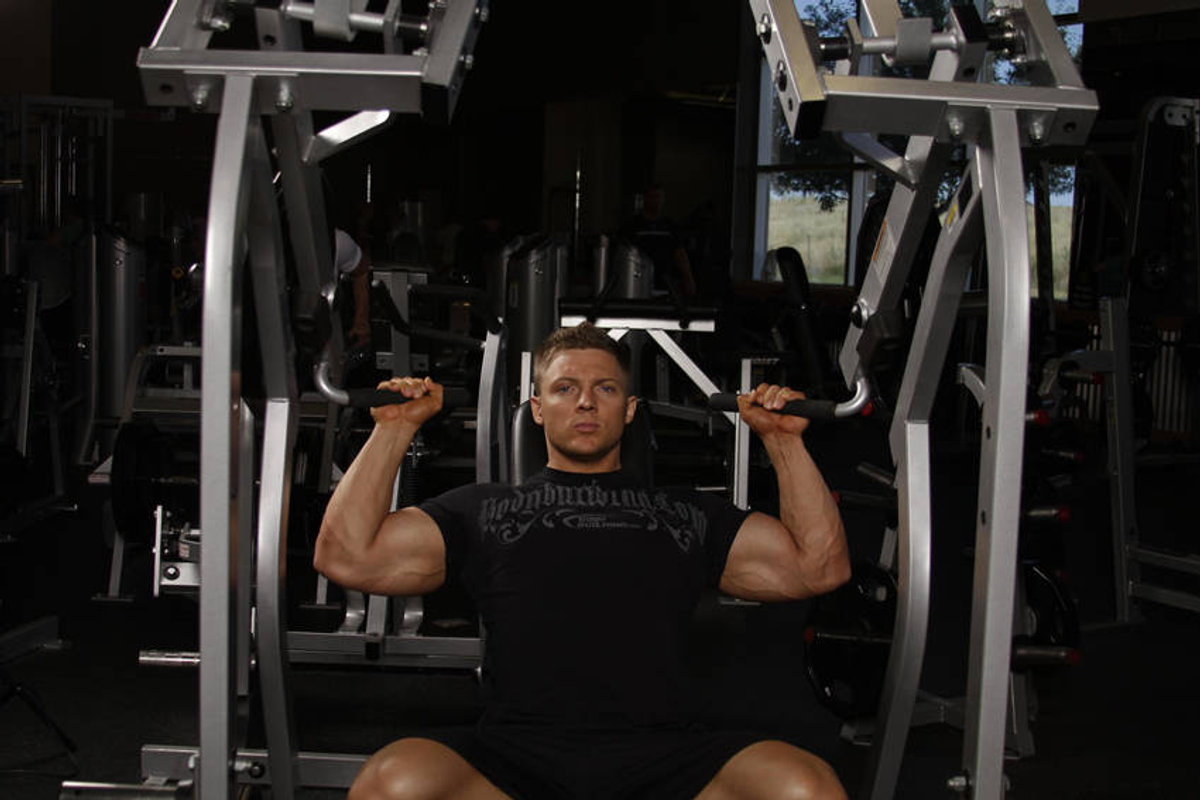
Machine Shoulder Press
Safety Rating for 40+
Benefits for 40+
The machine shoulder press offers the highest stimulus-to-fatigue ratio of all shoulder press variants – a decisive advantage given the slower recovery after 40. Fisher et al. (2024) confirmed in a meta-analysis of 17 studies that machine training effectively improves functional capacity in older adults with significantly lower injury risk. The guided path enables safe training to failure.
Form Cues
- Adjust seat height so handles start at shoulder level
- Back firmly against pad, retract shoulder blades
- Press and lower under control – no momentum from the torso
Common Mistakes
- Seat height set incorrectly – handles too high create impingement pressure in the shoulder joint
- Back lifting off the pad and arching excessively – common in 40+ due to weaker core musculature
- Letting the weight stack rest at the bottom instead of maintaining tension – wastes the eccentric stimulus
- Lowering too fast – uncontrolled eccentrics overload shoulder structures with stiff tendons
Modifications
Beginner
Start with very light weight and first optimize correct seat position and grip height. 12–15 reps at RPE 6 to learn the movement pattern.
For Joint Issues
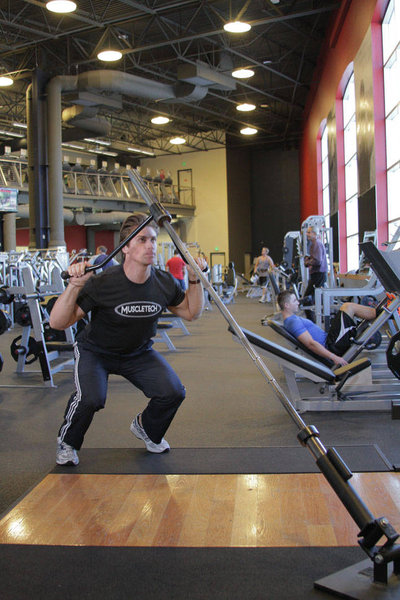
For shoulder impingement: shorten range of motion at the top – don't press fully overhead. Choose neutral grip if available. Switch to landmine press if discomfort persists.
Advanced
Use drop sets – after the last set reduce weight by 30% and perform additional reps to RPE 10. Machine safety allows intense failure training without a spotter.
Scientific Basis
Guided movement path completely eliminates stabilization demands. Highest SFR of all shoulder press variations. Fisher et al. (2024): machines provide effective strength gains with significantly lower injury risk – especially relevant for 40+.
Contraindications
- Acute shoulder impingement symptoms – despite machine safety, the overhead position remains stressful
- Post-shoulder surgery without medical clearance for overhead movements
- Significant shoulder mobility restriction (less than 150° flexion)
- Acute rotator cuff or bursa inflammation
Related Exercises
Related Guide