
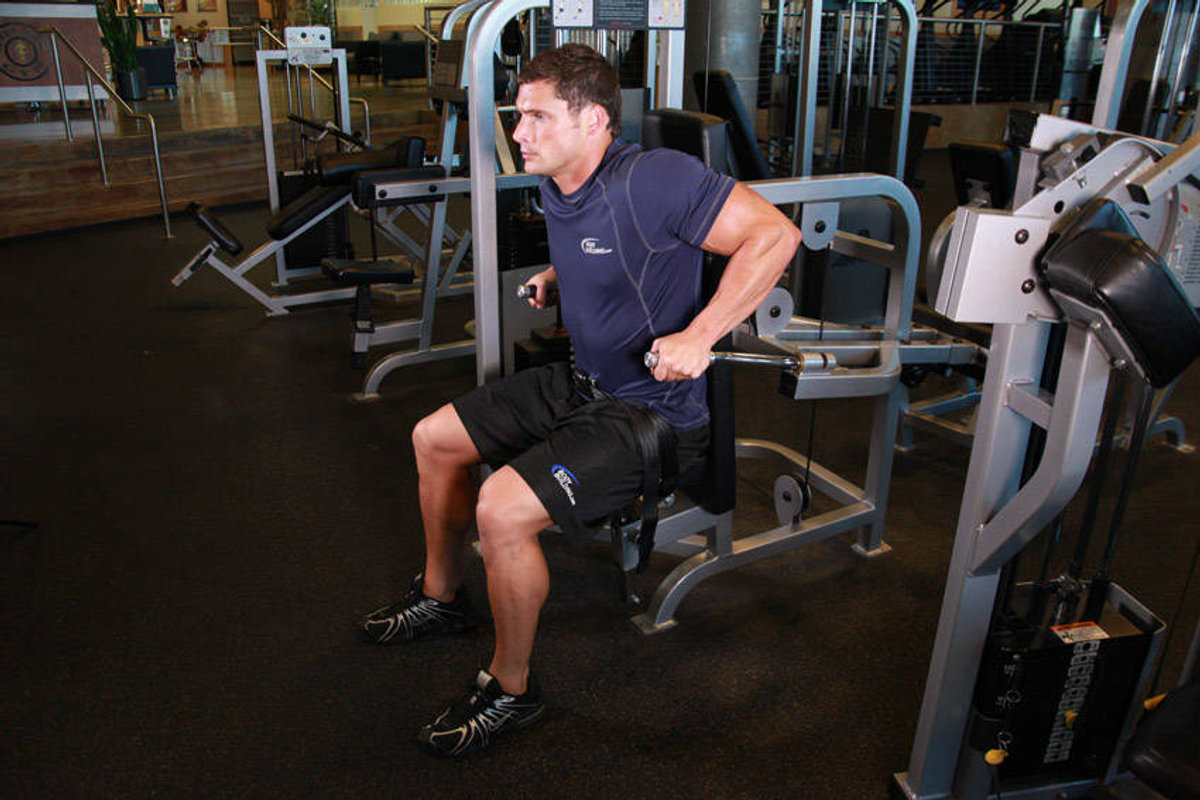
Machine Dip
Safety Rating for 40+
Benefits for 40+
The dip machine enables the compound benefits of dips (high triceps load plus chest and shoulder involvement) without the shoulder impingement risk that is critical for 40+ during free dips. The adjustable ROM prevents excessive shoulder flexion at the bottom. Fisher et al. (2024) demonstrate the lower injury risk of machine-guided exercises – especially relevant for the shoulder structures more vulnerable after 40, such as the rotator cuff and labrum.
Form Cues
- Handles at chest level, back against pad, upright torso
- Push down until arms extended – return under control
- Upright posture emphasizes triceps, leaning forward emphasizes chest
Common Mistakes
- ROM set too deep – same impingement issue as free dips for 40+
- Shoulders shrugging up during pressing – stresses the neck and upper rotator cuff
- Torso leaning too far forward for chest emphasis – for 40+ this disproportionately increases shoulder risk
- Eccentric phase too fast – controlled return is crucial for tendon adaptation
Modifications
Beginner
Set ROM conservatively (upper arms not below horizontal). Light weight, upright posture for triceps focus.
For Joint Issues
For shoulder issues: significantly limit ROM – arms maximum to 90° flexion. Maintain upright position. For persistent shoulder pain: switch to pushdowns that don't bring the shoulder into flexion.
Advanced
Higher weight with slow 3-second eccentric. Or: as compound opening exercise before isolation work (pushdowns, overhead extensions).
Scientific Basis
Research warns against deep dips (Tier 3) due to shoulder impingement. The machine eliminates this risk through guided movement path and adjustable ROM. Compound movement with high triceps stimulus at controlled shoulder risk.
Contraindications
- Acute shoulder impingement – even the machine-guided dip can compress the supraspinatus tendon
- Shoulder instability (habitual dislocation) – the downward pressing movement stresses the anterior capsule
- Acute biceps tendon tendinopathy at shoulder insertion – shoulder flexion under load is painful
- Severe shoulder arthritis – the dip movement requires significant shoulder mobility
Related Exercises
Related Guide