
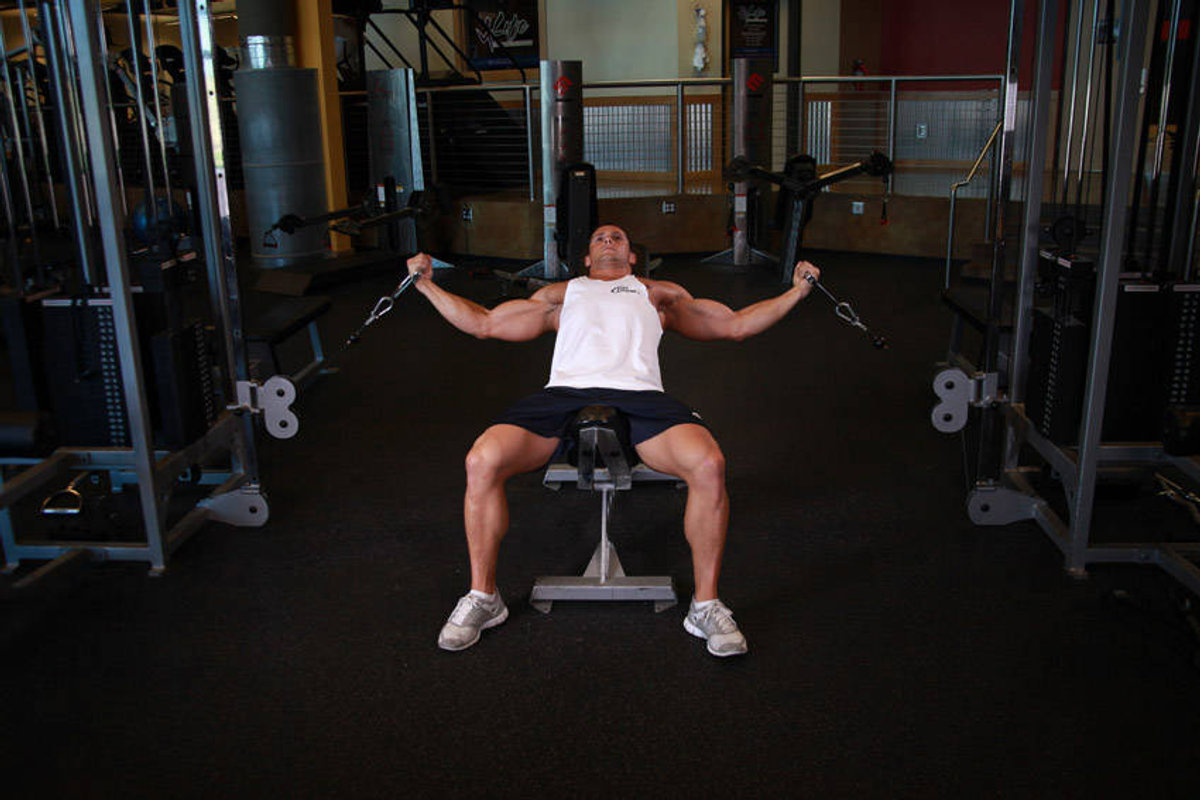
Incline Cable Flye
Safety Rating for 40+
Benefits for 40+
The incline cable flye combines three advantages for 40+: targeted upper chest stimulation, constant cable resistance throughout the ROM, and training at lengthened muscle positions. Kassiano & Schoenfeld (2023) demonstrated that the stretched position provides the strongest hypertrophy stimulus. Unlike dumbbell flyes, tension is maintained even at the top – maximizing training time per set for 40+ trainees whose volume budget is limited by slower recovery.
Form Cues
- Position incline bench between low cable pulleys (30–45°)
- Bring arms together in a wide arc above the chest
- Keep elbows slightly bent — don't lower below shoulder height
Common Mistakes
- Opening arms too far down – shoulder stretch is already more intense at incline, observe shoulder-height limitation
- Setting bench too steep – above 45° the anterior shoulder is overloaded
- Weight too heavy for isolation – the flye movement requires control, not maximum force
- Locking out elbows – slight bend protects elbow joint and distal biceps tendon
Modifications
Beginner
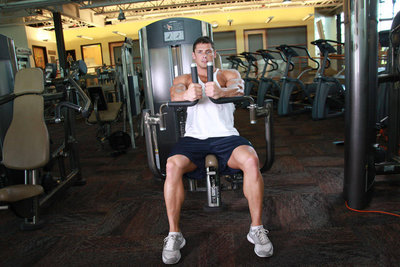
First use flat cable flyes or butterfly machine to learn the movement pattern. Introduce incline cable flye only after 4–6 weeks of foundational training.
For Joint Issues
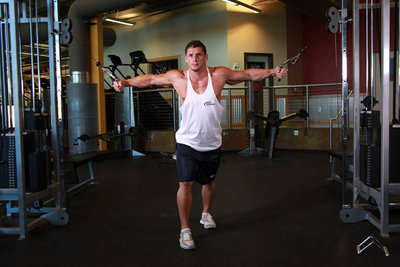
For shoulder issues: choose a shallower angle (20–30°) and limit range of motion to 90° elbow opening. Alternatively switch to standing low cable crossovers.
Advanced
Partial reps at the end of a set only in the stretched portion of the ROM (bottom partials) for maximum hypertrophy stimulus per Kassiano & Schoenfeld.
Scientific Basis
Combines incline position benefits (upper chest) with constant cable resistance. Kassiano & Schoenfeld (2023): Partial ROM at lengthened positions promotes superior hypertrophy — cable flyes deliver exactly this tension profile.
Contraindications
- Acute shoulder impingement with pain during arm elevation and opening
- Shoulder joint instability (the open arm position at incline is particularly vulnerable)
- Active biceps tendon inflammation
- Severe shoulder arthritis with restricted range of motion
Related Exercises

Related Guide