Chin-Up
Safety Rating for 40+
Benefits for 40+
Chin-ups are an excellent indicator of functional upper body strength that should be actively maintained after 40. High biceps activation simultaneously trains arm flexors important for daily activities. As a bodyweight exercise, it promotes awareness of one's strength-to-body-weight ratio – an important health marker with age. The eccentric phase strengthens tendons and ligaments, particularly valuable given the slowed collagen synthesis after 40.
Form Cues
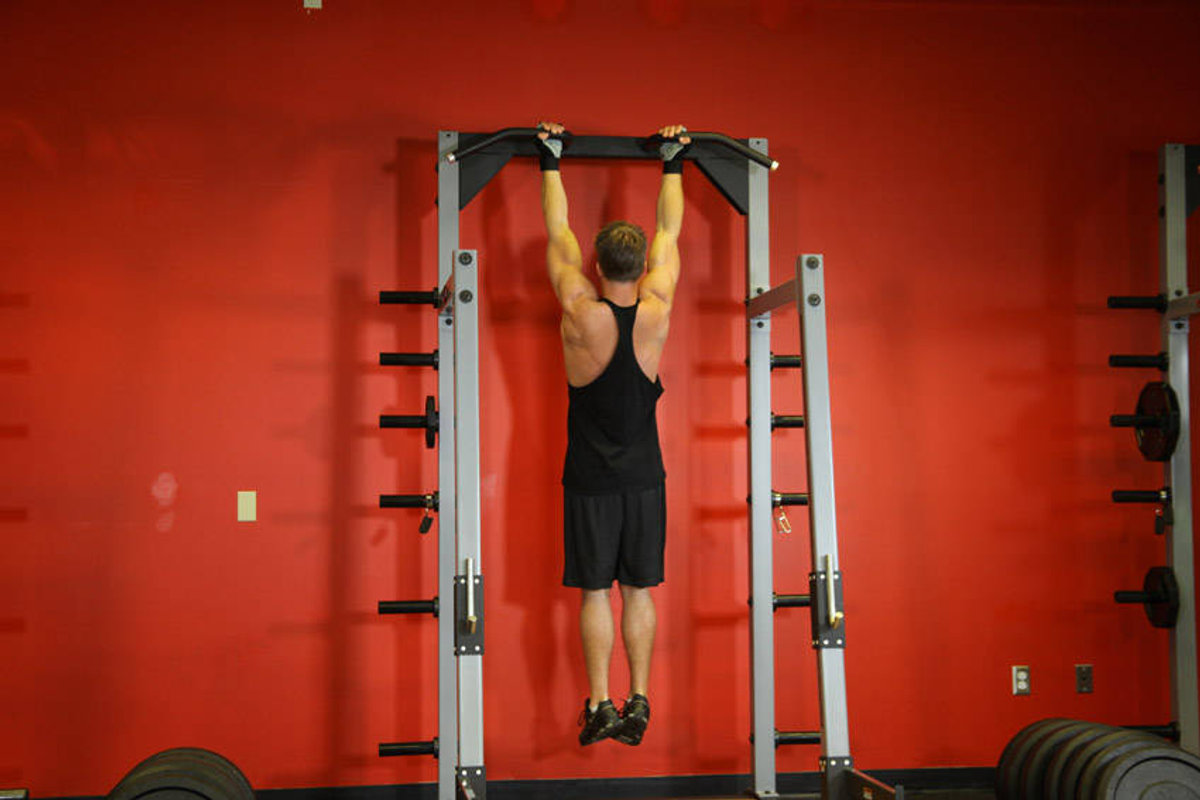
- Supinated grip (palms facing you), shoulder-width apart
- Start from full hang – pull shoulder blades down first
- Chin above bar, lower under control without swinging
Common Mistakes
- Kipping and using momentum – creates uncontrolled peak loads on shoulder and elbow joints
- Not lowering fully – shortens range of motion and training stimulus
- Supinated grip too narrow – increases stress on wrists and medial elbow
- Not bringing chin above bar but pushing head forward – cervical spine stress
Modifications
Beginner
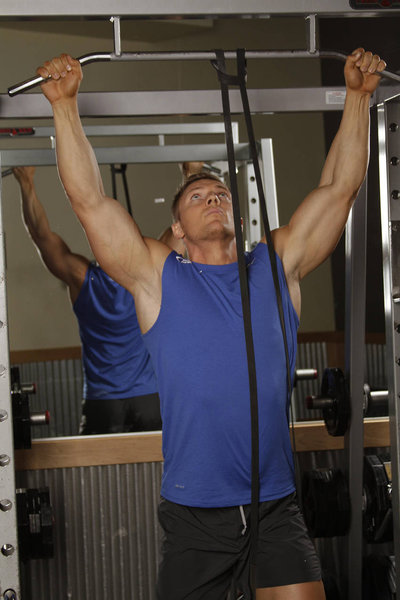
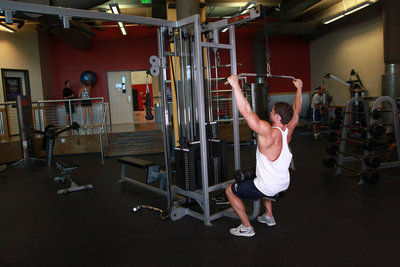
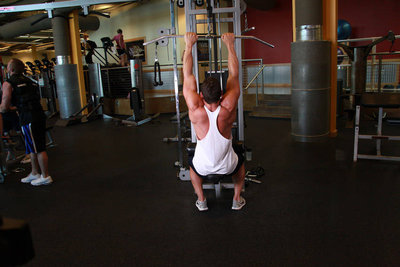
Start with band-assisted chin-ups using a strong band. Alternative: Train only the eccentric phase – jump up and lower for 5 seconds under control. Use lat pulldowns as an equally effective hypertrophy alternative.
For Joint Issues
For back or shoulder issues: prefer neutral-grip lat pulldown – Gentil et al. (2015) showed comparable hypertrophy with significantly less joint stress. For wrist pain: use neutral-grip pull-up handles.
Advanced
Added weight via dip belt for 5–8 reps. Weighted negatives: 110–120% body weight, only eccentric lowering for 5–6 seconds. L-sit chin-ups for maximum core activation.
Scientific Basis
Chin-ups maximally activate lats and biceps. Tier 2 for 40+ because full body weight must be moved and shoulder stress at end-range is high. Gentil et al. (2015): Lat pulldowns achieved comparable hypertrophy – pulldowns are the safer alternative.
Contraindications
- Active shoulder impingement or rotator cuff tear
- Medial epicondylitis (golfer's elbow) – the supinated grip directly loads the affected tendons
- Unstable shoulder joints with tendency to dislocate
- Severe degenerative cervical spine changes aggravated by hanging
Related Exercises
Related Guide