Cable Chest Press
Safety Rating for 40+
Benefits for 40+
Cables are an effective middle ground between machines and free weights for 40+ – offering free range of motion with constant resistance throughout the entire ROM. This means even muscle loading without the tension drops that occur with dumbbells. The standing position simultaneously trains postural muscles crucial for posture after 40. Shoulder is rated Caution as the free movement path allows improper loading with poor technique – correct cable height and scapular retraction are essential.
Form Cues
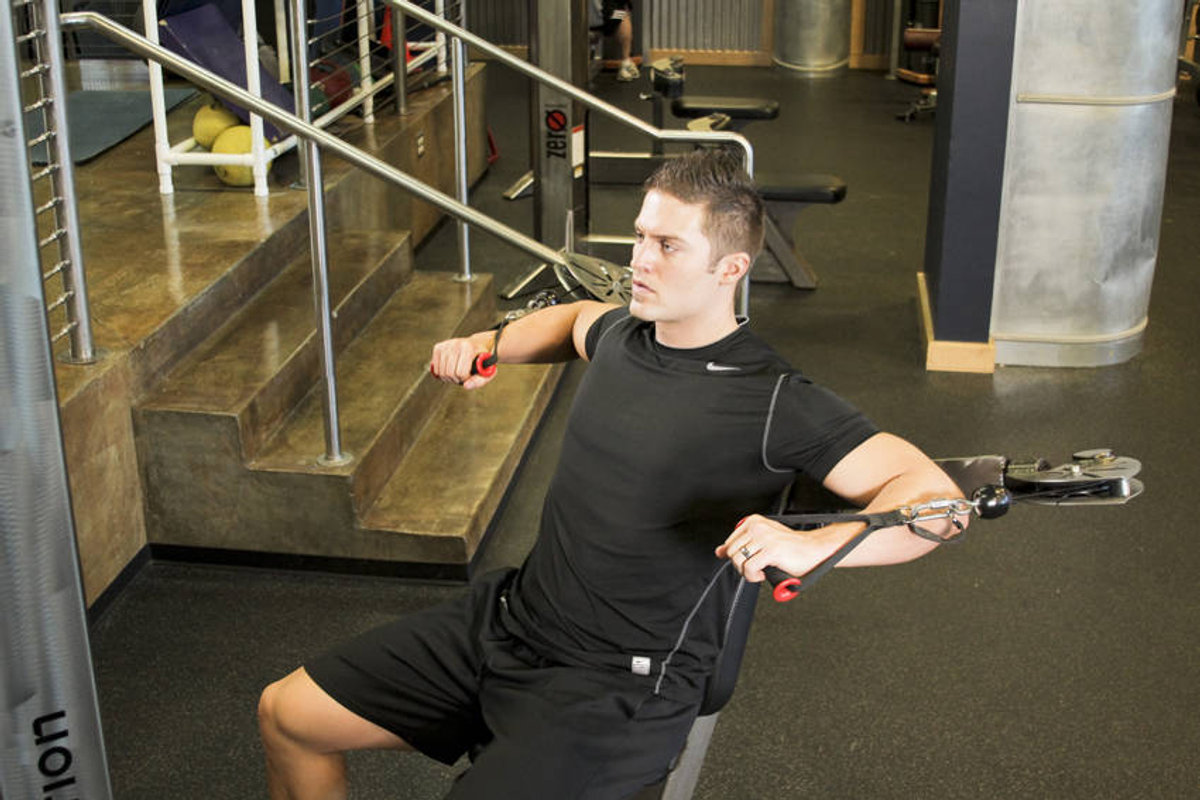
- Set cables at chest height, staggered stance for stability
- Press forward and bring hands together in front of chest
- Return slowly and under control — maintain tension
Common Mistakes
- Leaning too far forward and using momentum from upper body – the chest must do the work, not body weight
- Cable position too high or too low – set to exact chest height for optimal chest fiber activation
- Not bringing arms fully together at the end – adduction at the endpoint maximizes chest contraction
- Forgetting staggered stance – without a stable base, the lower back compensates, which can stress discs in 40+ trainees
Modifications
Beginner
Start with very light weight and practice standing stabilization. Alternatively perform seated on a chair for more stability.
For Joint Issues
For shoulder issues: limit range of motion – don't bring arms behind the shoulder plane. For back issues: perform seated or leaning against a wall for spinal support.
Advanced
Single-arm execution for enhanced core activation. Cable drop sets (quick weight reduction via pin system) for metabolic stress.
Scientific Basis
Cables provide constant resistance throughout the full range of motion — unlike dumbbells where tension varies. The research identifies cable exercises as an excellent middle ground between machines and free weights.
Contraindications
- Acute shoulder injury with movement restriction
- Severe balance disorders preventing safe standing position at the cable station
- Acute disc herniation – the standing position requires core stability under load
- Significant pectoral strain during healing phase
Related Exercises
Related Guide